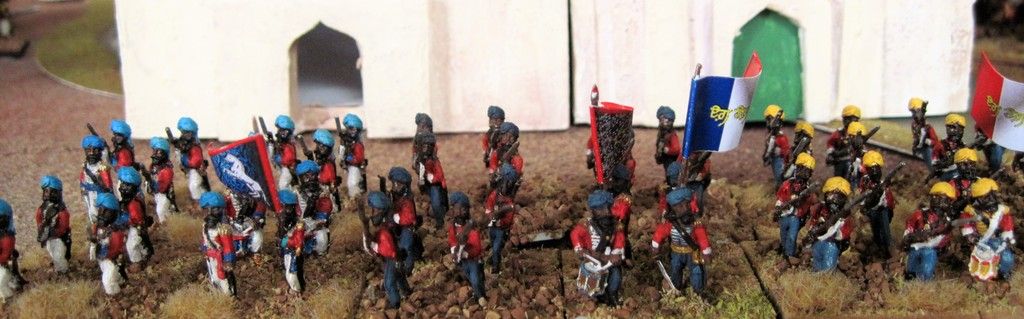
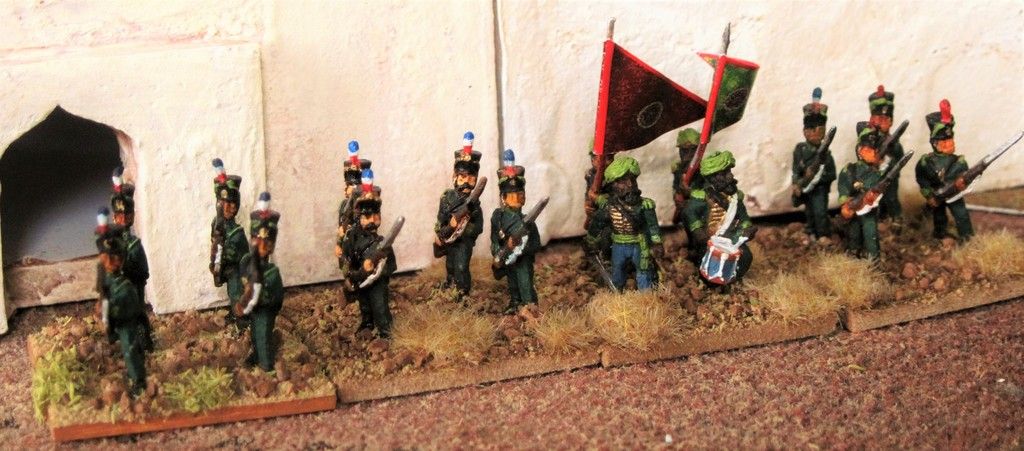
The Khalsa regular cavalry were trained by veteran soldiers
who had military experience in European wars.
Accordingly, they could carry out all of the evolutions and manoeuvres
expected of their European counter parts.
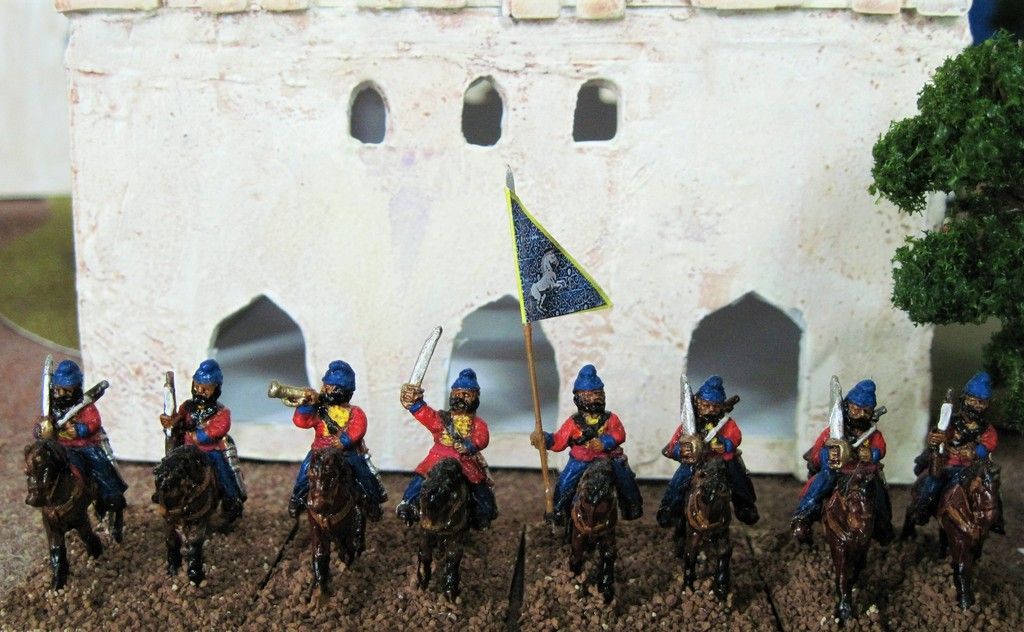
There were three branches of the Khalsa cavalry, cuirassiers, dragoons
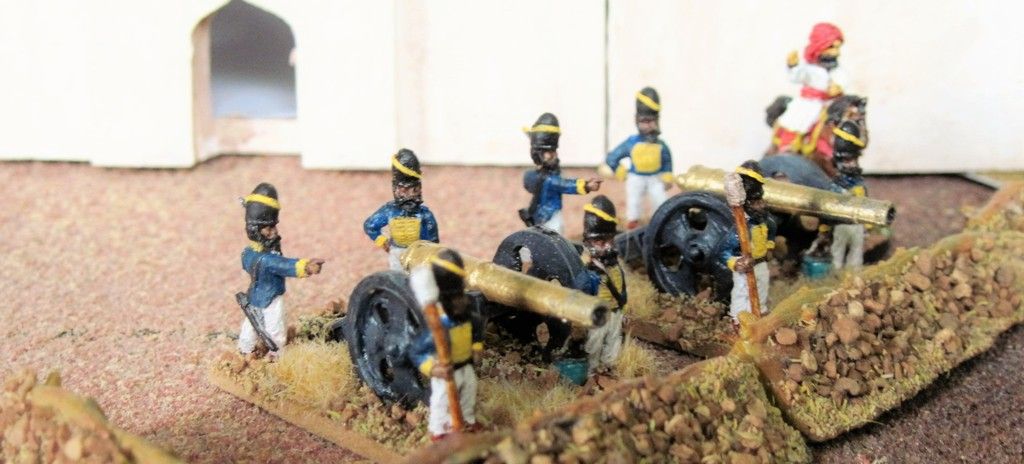
and lancers all fully and appropriately equipped. They could be supported by Khalsa horse
artillery.

The Punjab was horse territory however the numerous and more socially prestigious Gorchurra seem to have had their pick of the horse flesh available. The Khalsa cavalry chose from what was left. It also seems clear that the cavalry was the least prestigious branch of the Khalsa. This inclines me to rate them all simply as regular – if you disagree upgrade or down grade some of them.
The Punjab was horse territory however the numerous and more socially prestigious Gorchurra seem to have had their pick of the horse flesh available. The Khalsa cavalry chose from what was left. It also seems clear that the cavalry was the least prestigious branch of the Khalsa. This inclines me to rate them all simply as regular – if you disagree upgrade or down grade some of them.

Unit
|
Armament
|
Combat Die
|
Defence Die
|
Short Range
|
Medium Range
|
Long Range
|
Cuirassiers
|
Sword
|
D10
|
D6
|
-
|
-
|
-
|
Lancers
|
Lance
|
D10
|
D6
|
0-1
|
-
|
-
|
Dragoons
|
Carbine
|
D8
|
D6
|
0-1
|
2-3
|
-
|
Dragoons
|
Carbine
|
D10
|
D6
|
0-1
|
2-3
|
-
|
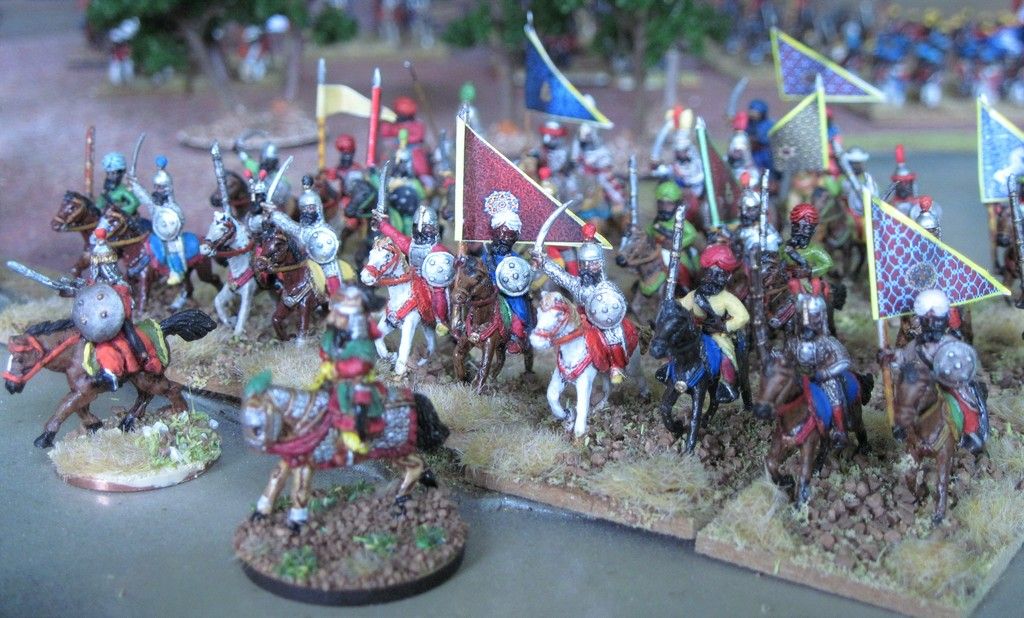
The Gorchurra were the nobility and gentry of the Sikh
kingdom and their immediate followers.
They were well equipped, often armoured and sometimes rode barded
horses. Their weapons were of good quality and included lances,
swords, axes and long Jezzail like matchlocks. They were all excellent horsemen.
Before Ranjit created the Khalsa they had
been the mainstay of the army and with the Alkali its battle winners. Their favoured tactic was to wear the enemy
down by firing from the saddle in a skirmishing or caracole fashion followed up
by a fierce charge.
Such tactics were
less effective against European regular infantry who could both out shoot and
out range the Gorchurra. That said there
is no reason to believe that a new tactical repertoire was adopted and so my
Gorchurra may both charge or skirmish or both if they carry matchlocks.
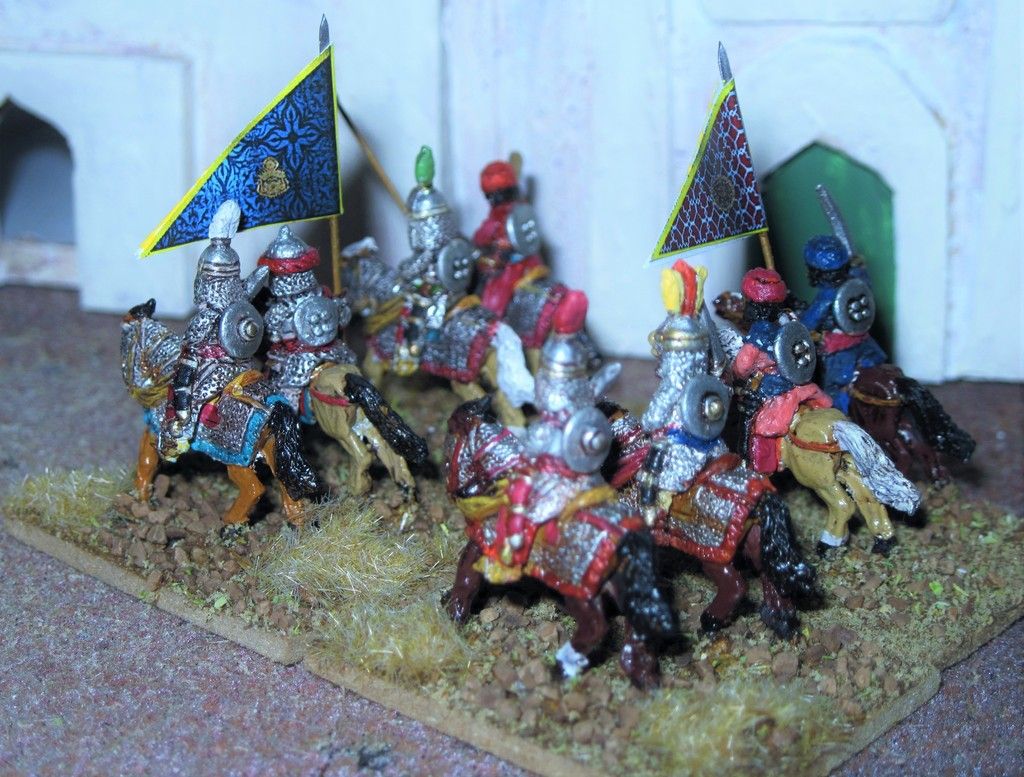
The question arises of how to model the effect of armour in respect of the
wealthier Gorchurra and Khalsa cuirassiers.
Plainly this is an advantage in melee and we should also note that even
unarmoured Gorchurra were reported by British cavalry as very difficult to hurt
as they leaned over their horses presenting only a thick turban and a shield on
the back as a target. A unit of Bengali irregular cavalry proved to be the British exception (as Brent Nosworthy noted) and caused havoc among the Gorchurra with their razor sharp swords.
Unit
|
Armament
|
Combat Die
|
Defence Die
|
Short Range
|
Medium Range
|
Long Range
|
Fully Armoured
|
Lance
|
D12
|
D10
|
-
|
-
|
-
|
Armoured
|
Matchlock
|
D12
|
D8
|
0-1
|
2-3
|
-
|
Unarmoured
|
Matchlock
|
D10
|
D6
|
0-1
|
2-3
|
-
|
Let’s look at the remainder of the irregulars now. Many of them had previous military experience
and all owned and practiced with weapons. For convenience I have divided them
into matchlock infantry and melee infantry in reality the division would not
have been so hard and fast. Also it
seems a good place to include the camel gunners.
Unit
|
Armament
|
Combat Die
|
Defence Die
|
Short Range
|
Medium Range
|
Long Range
|
Matchlock men
|
Matchlock
|
D4
|
||||
Swordsmen
|
Sword
|
D4
|
-
|
-
|
-
|
|
Camel Guns
|
Up to 3lb Gun
|
D4
|
There are a couple of points here that could be reflected in the rules to add flavour when gaming Sikh War battles. I'm minded to adopt the following:
- British cavalry,except lancers and a single unit of irregular cavalry, are down 1(in FOB terms) in melee against Gorchurra or Cuirassiers
- The Matchlock was clumsy compared to the Musket so down 1 (FOB again) for all firing
Finally a word on the Sikh command, treachery only infected the highest level of command below that officers were as able or otherwise as in any other professional army.