Thursday, 12 May 2016

The Battle of Mudki Part One

The battle of Mudki began late, around 4pm on a December day and continued until midnight.  Gough’s army had marched hard and were tired and thirsty.  The Sikhs were well rested. Most of the battle was fought in darkness on broken ground or in jungle.


The battle can be divided into three stages an artillery duel, the advance and withdrawal of the British cavalry and the infantry fight.  

I’m going to follow Sidhu’s account as being the most rigorous and up to date.  As you will see there are some things we do not know, where I might hazard a guess and so might you.  We will look at the ground at Mudki, then at the respective forces and finally, in part two at what seems to have happened.

The terrain at Mudki had a great influence on how the battle was fought.  

The British faced onto some cultivated land and newly cleared jungle, beyond that were sandy hillocks big enough to obscure vision and hinder movement and bushes dense enough to hide Sikh sharpshooters. The movement of the troops threw up clouds of dust that further reduced visibility. The ground on both Sikh flanks was mainly jungle as was the rear of their position. The Sikh centre seems to have drawn up near or among the sandy hillocks and their flanks in the adjacent jungle.


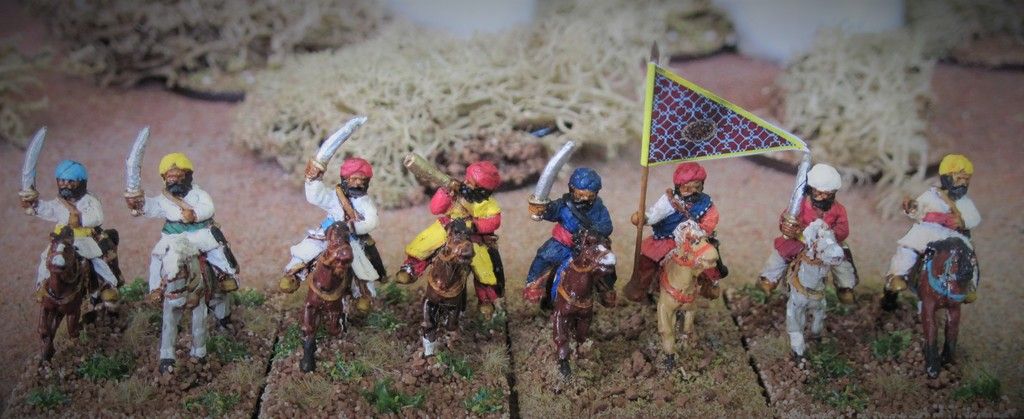
According to Captain Nicholson (Gough's Assistant Political Officer) the Sikh army at Mudki consisted of 2000 regular Khalsa infantry and artillery men serving 22 guns. The cavalry consisted of 1,500 men and were a mixture of regulars and Gorchurra. Nicholson’s information came directly from the Sikh Generals collaborating with the British, and I would consider it reliable. The subsequent official British account credits the Sikhs with an additional 9,000 cavalry I think it safer to go with Nicholson’s figures.

The Sikh army deployed as follows.  Metab Singh’s Brigade formed the Sikh right flank with some of the Fauj I Khas comprising the centre and Bahadhur Singh’s Brigade on the left flank.  Many skirmishers were sent forward.  The Sikh guns formed with the infantry. The Sikh cavalry formed on both flanks of the infantry.


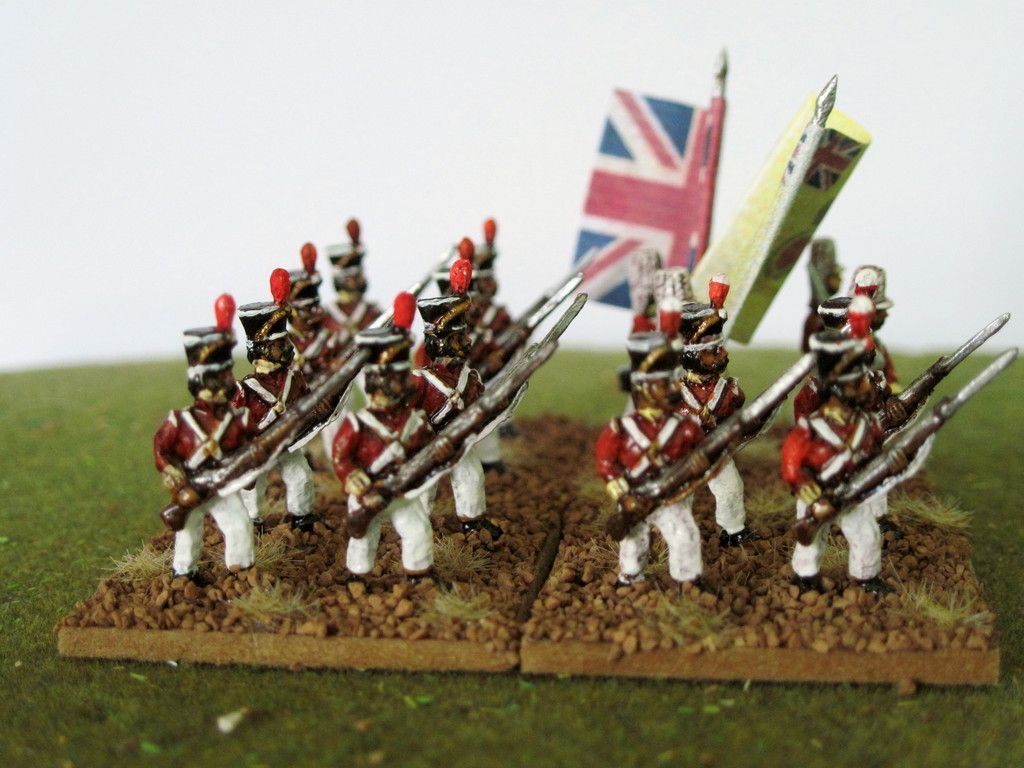
The British army had 12,350 men and 42 guns, 36 of which were horse artillery. The cavalry was initially organised into three brigades.


The First Division under Sir Harry Smith formed the British right.  It's first brigade under Bolton consisted of HM 31st Foot and the 24th   and 47th Native Infantry.  It may be the 24th was left as a camp guard at the Village of Mudki. 

On Bolton's left Brigadier Wheeler commanded the second brigade comprising HM 50th Foot and the 42nd and 48th Native Infantry.  White’s cavalry Brigade of the 3rd Light Dragoons and one wing of the 4th Bengal light cavalry formed to the right of the infantry.

The Second, and weakest, Division formed the British centre and consisted of two brigades consisting of the 2nd, 16th and 45th Native Infantry.  Gough’s Brigade of cavalry comprising the 5th Bengal light cavalry and the Governor General’s body guard also formed with the Second Division but was subsequently transferred to the First Division.

The Third Division on the British left was commanded by Brigadier McCaskill.  He had, in the 1st Brigade, HM 26th Foot and the 73rd Native Infantry. In the 2nd Brigade were HM 80th Foot.  Also on the left Brigadier Mactier led the 9th Bengal Irregular Horse and one wing of the 4th Bengal light cavalry.


Most of the British artillery was positioned in front of the infantry.


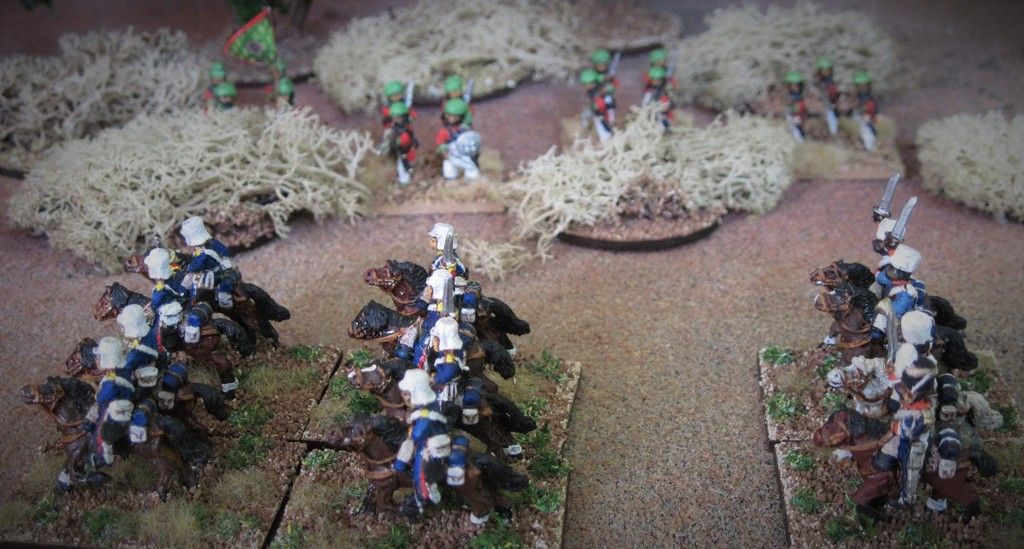
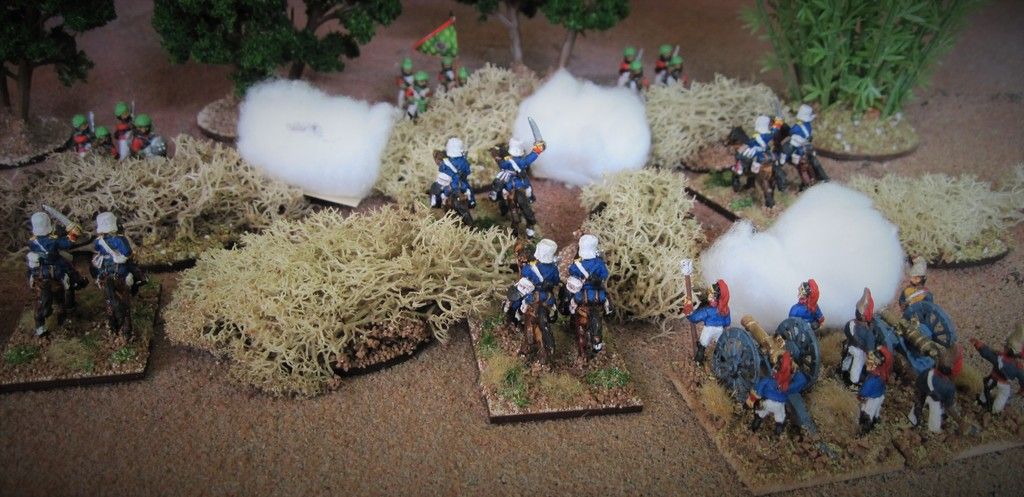
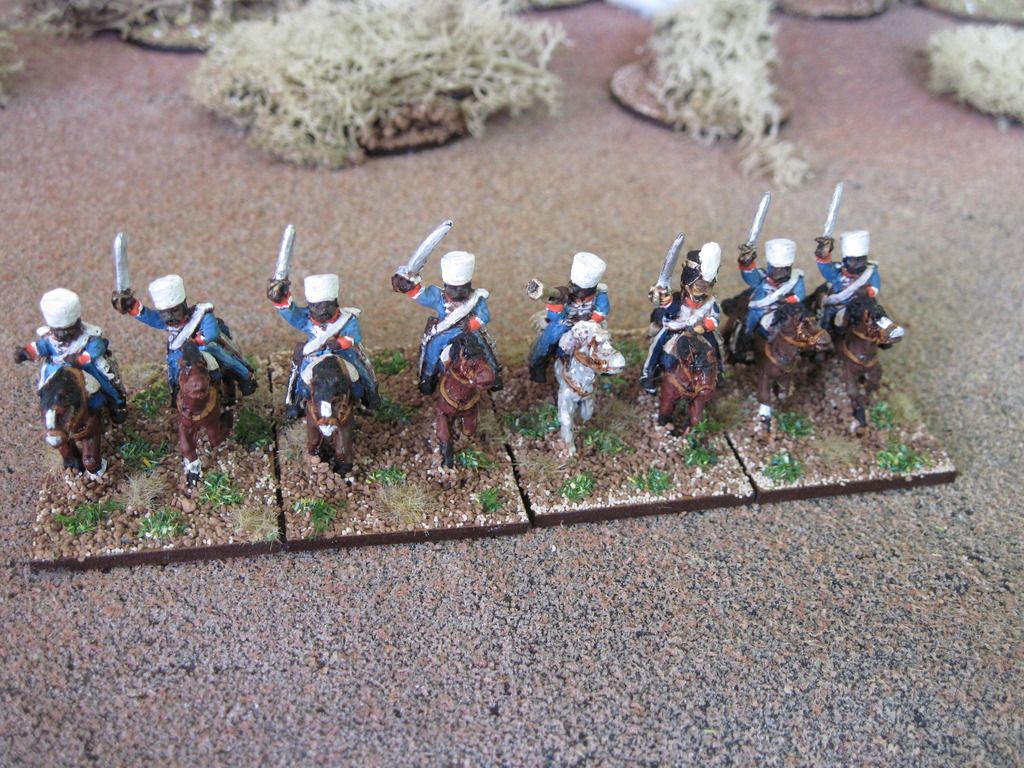
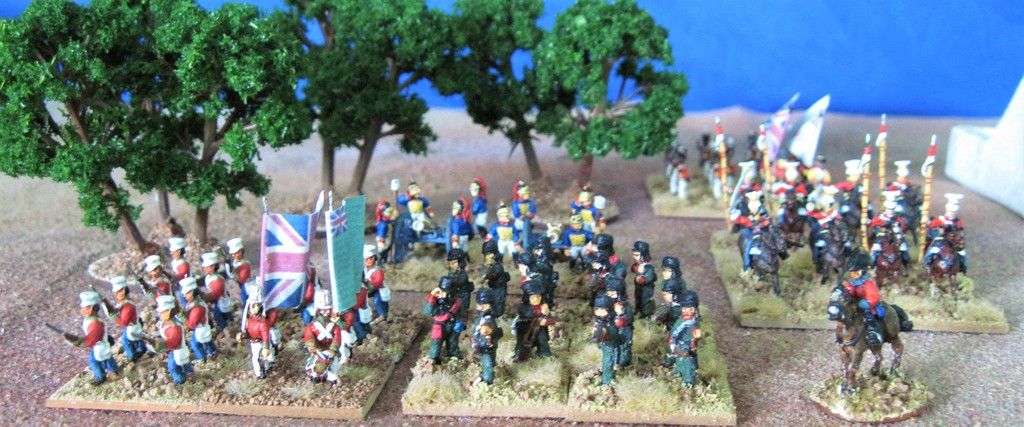
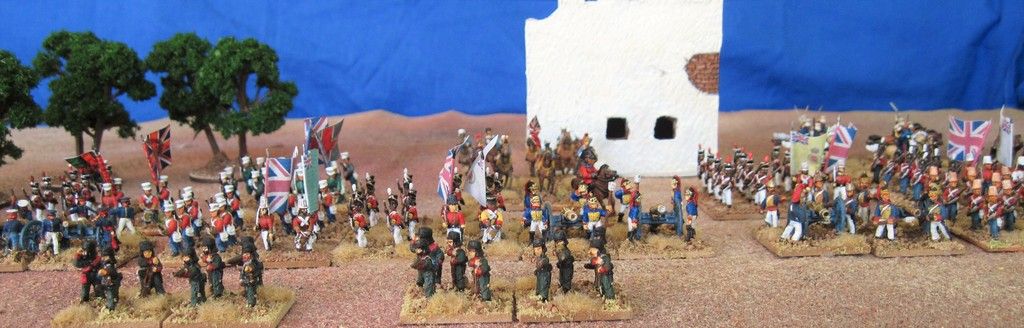
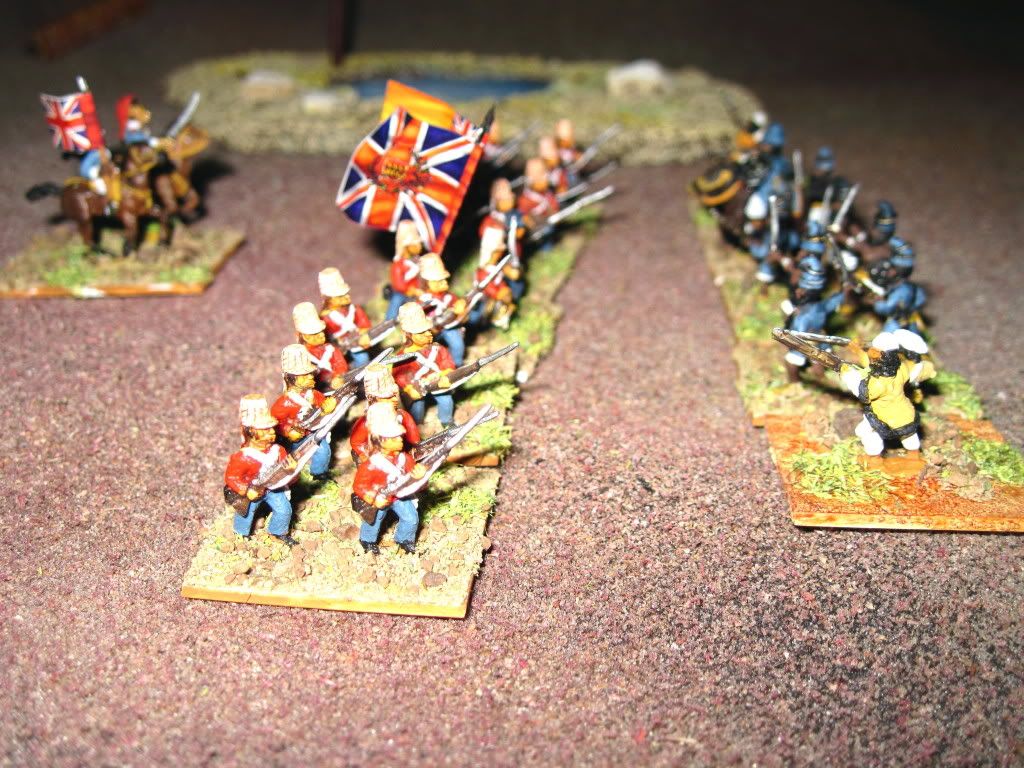
I have translated the armies for the table top using Piquet’s Field of Battle with a battalion of 500 men represented by a 4 base unit, a full cavalry unit also as 4 bases, a wing of cavalry as 2 bases and a model battery of 2 guns representing 6-8 guns and crew.
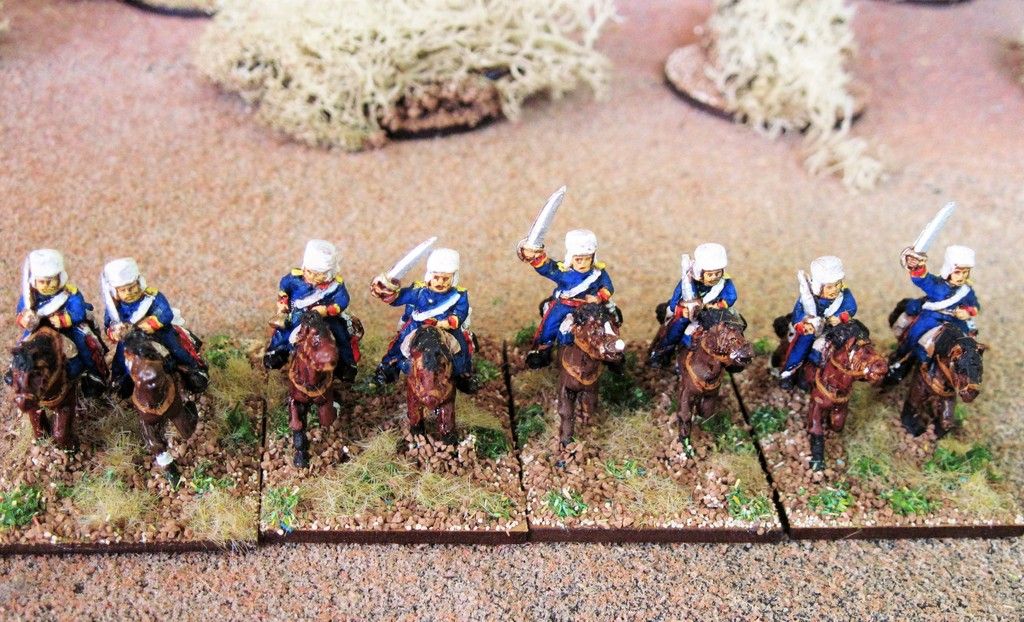


The Sikh Army needs a little rounding up for the infantry and artillery.  If you wish to round down give them three batteries. I think the Sikh artillery was heavy.

The Sikh army using this method has 5 units of regular infantry, 4 batteries of artillery and 3 cavalry units.  We don’t know how many of the cavalry were regular.  I’m going for 2 regular and 1 Gorchurra but that could be reversed and still comply with the information we have. 

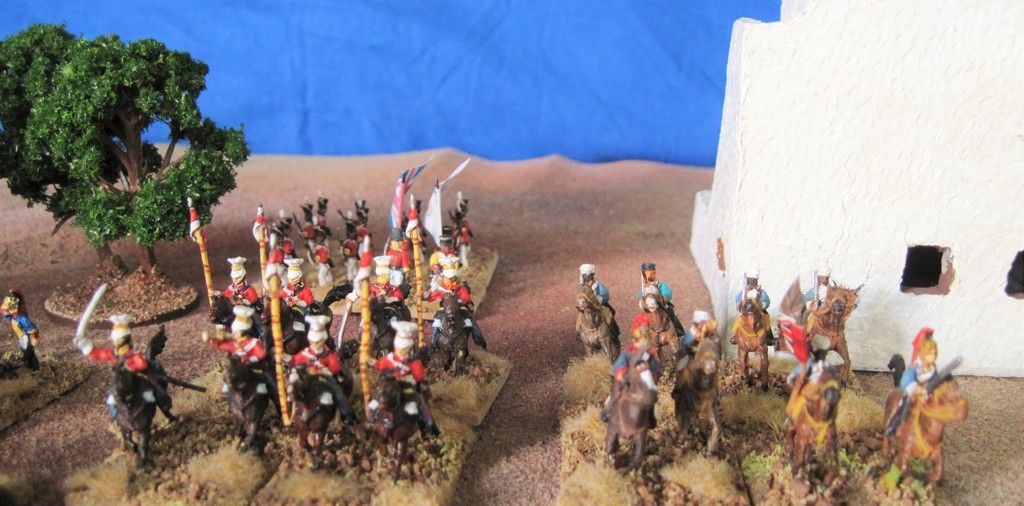
The British Army would have 11 units of infantry or 12 if you think the 24th NI were present, 4 units and 1 wing of cavalry and 7 batteries. I would give the British one heavy battery to be deployed in the centre alongside 4 batteries of Horse artillery.  The cavalry brigades deployed on the flanks were accompanied by Horse Artillery I have opted for 1 battery each. I've guessed at one wing of cavalry for the Governor General's body guard.

Clearly Gough enjoyed a significant advantage in numbers but this would be offset by the nature of the ground at Mudki and the tenacity of the Khalsa.

Sunday, 1 May 2016

A British Army for the First Anglo Sikh War Part 2

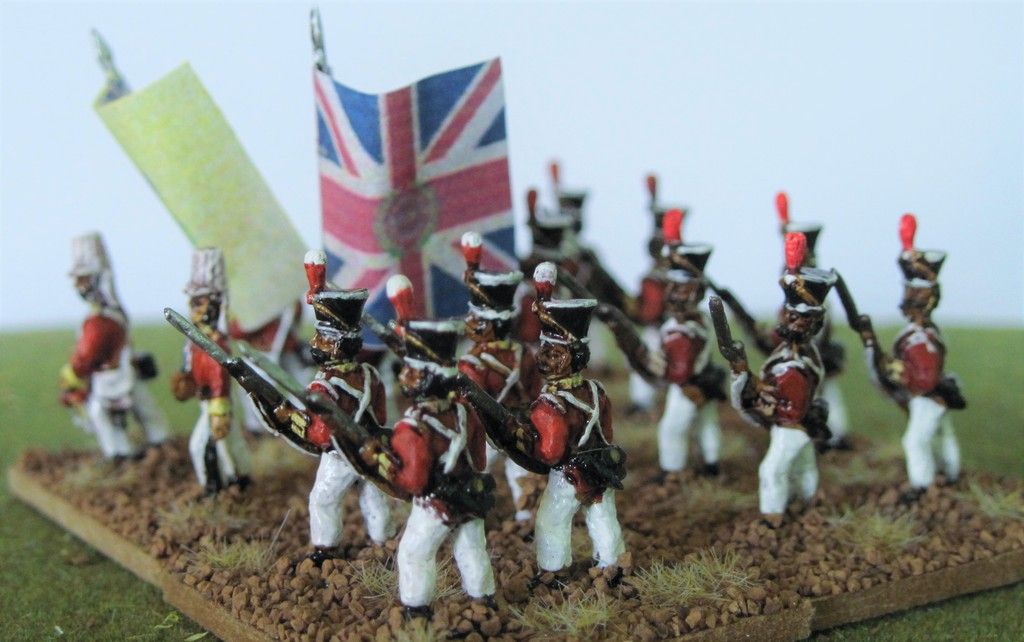
Previously we examined some background to the war and noted that the British army as a whole was a good and professional one.  There were of course differences among the troops.


India was a difficult climate for white troops who died like flies regardless of whether or not there was a war on. In the hottest times of the year heat and dust could impair effectiveness and thirst could even drive men beyond the constraints of discipline.


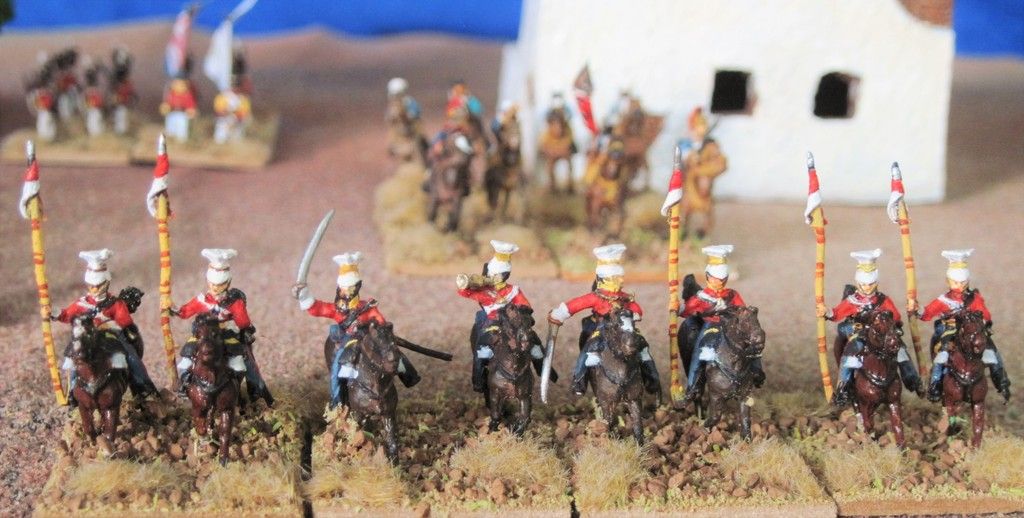
The Queen’s cavalry regiments had a fine sense of their social as well as racial standing and did perform on the battle field with notable dash.


The Sepoys and Sowars tended to be better physical specimens than many of their white equivalents.  The Company had its pick of the manhood of India. Soldiering was regarded as an honourable and remunerative occupation by sections of Indian society who had lived by it for generations .


British troops were tough and could decide to fight to the last man (Gandamack) but they could also run away (outside the cantonment at Kabul) just like any other soldiers who think all is lost.

There is also the quality of the opposition to be considered. In his memoirs a Sepoy wrote that prior to the Sikh War he was used to giving the enemy a volley or two and then charging as they began to run away.

The Sikh War was not like that and of course a British army had recently been lost in Afghanistan.  Therefore it is interesting to note that the British officer class, and consequently the men, seem to have believed that the Khalsa was hopelessly suborned by democratic republicanism and therefore no longer could operate in a disciplined manner.  Sidhu gives us a British eye witness here.

“So confident were our officers and men that the Sikh army was composed of nothing but a rebel mob, that they did not believe they would hazard an engagement with us – and I heard several officers say (even after the cannonading had commenced),’O, they will run away before we get up to them – they will not fight us’, and several other expressions of similar kind, showing how very ignorant we were of their real strength and intentions; and in this ignorance of the Sikh army, it is wonderful that all were alike involved, even the Governor and the Commander- in- Chief, each of whom, it should fairly be supposed ought to have been possessed of correct information on so important a subject.”

With hindsight we can see the Battle of Mudki must have been something of a shock.

My starting point for an army list (FOB) for the Sikh War is to recognise that the strength of the British army lay in professionalism, discipline and fire power. As many of their Indian opponents testified, British command and control, mostly, worked very well indeed.  British fire power, Afghans in ambush aside, had always prevailed. The soldiers themselves were all well trained regulars save for bands of irregular cavalry.

I try to reflect a flavour of the foregoing in the ratings list.  As ever if you disagree feel free to amend as you see fit.

I am rating (FOB) all Sepoys and Sowars and the majority of other troops simply as regular. The Queen’s cavalry regiments have the combat capabilities of elite troops but remain regulars in other respects.  Queen’s infantry regiments have the combat capabilities of regulars but are otherwise Crack.  Ghurkhas and the Rifles are rated Crack. The idea is to reflect both the self - image and the reality of the various formations.  

A British army for the Sikh War might look like this.


Unit
Armament
Combat Die
Defence Die
Short Range
Medium Range
Long Range
80th
Musket
 D8
D8
0-2
3-4
4-6
31st
Musket
 D12+1
D8
0-2
3-4
4-6
16th NI
Musket
D10 
D6
0-2
3-4
4-6
24th NI
Musket
 D8
D6
0-2
3-4
4-6
44th NI
Musket
 D12
D6
0-2
3-4
4-6
47th NI
Musket
 D10
D6
0-2
3-4
4-6
Ghurkhas
Musket
 D10
D8
0-2
3-4
4-6
Rifles
Rifle
 D12
D8
0-2
3-4
4-8

Unit
Armament
Combat Die
Defence Die
Short Range
Medium Range
Long Range
5th Dragoons
Carbine
D12
D6
0-1
2
3
Lancers
Lance
D12+1
D6
0-1


Bengal Light Horse
Carbine
D8
D6
0-1
2
3
Light Horse
Carbine
D10
D6
0-1
2
3

Unit
Armament
Combat Die
Defence Die
Short Range
Medium Range
Long Range
HM Foot Artillery
9lb Gun
D10
D6
0-4
5-8
9-16
Company Foot Artillery
9lb Gun
D12
D6
0-4
5-8
9-16
Bengal Horse Artillery
6lb Gun
D8
D6
0-4
5-8
9-16
Bengal Horse Artillery
6lb Gun
D10
D6
0-4
5-8
9-16

Irregulars
Unit
Armament
Combat Die
Defence Die
Short Range
Medium Range
Long Range
Bengal Irregular Horse *
Mixed
D8
D6
0-1
-
-
Irregular Horse
Mixed
D6
D6
0-1
-
-


The irregular horse in contemporary illustrations are shown with a variety of arms. I have given them short range fire power here to reflect a pistols and matchlocks or possibly even bows.  The *Bengalis are intended to be the fellows with razor sharp swords mentioned earlier on this blog.  


We can see that the British will enjoy an advantage in regular infantry firepower.  When we consider the artillery the pendulum swings towards the Sikhs who have heavier guns.  With the cavalry once again the Sikhs will enjoy an advantage.  The British therefore will have to rely on command and control, discipline and infantry fire power to carry the day.  I think this is entirely the right effect for gaming the First Anglo Sikh War.

Thursday, 28 April 2016

A British Army for the First Sikh War


The four pillars of British rule in India were control of the economy, military discipline, fire power and political intrigue.  Before we move on to military considerations we can note a little about the economy and intrigue.

The wealth extracted from India by the Company was colossal. The control of the Company was entrusted to members of the British elite who moved seamlessly (mainly) between Government and Company and back again. The tension between General Sir Hugh Gough a valued and proven military commander (an old Peninsular man) and Governor General Sir Henry Hardinge (also a Napoleonic Veteran) an actual member of the elite was informed by that reality.

From the time of Plassey political intrigue had been a major element in British sub-continent military operations.  In India’s shifting kaleidoscope of loyalties key elements of the opposition forces could be bought off before the decisive clash. 

As we learn from Sir Richard Burton’s diaries this had, on the eve of the Sikh War, been done to enable the conquest of Scinde.  It is therefore surprising to note the hostile and contemptuous post war attitude of British officers towards the Sikh generals who did so much to enable a British victory in the Punjab.

British military might on the sub-continent relied on the Company’s army and various Queens regiments posted to India as part of the garrison.  For major campaigns irregular troops, mostly cavalry would be signed up. Ghurkhas were of course already highly valued auxiliaries.

The shadow of the Duke still hung around the army.  Senior staff had often served under him, infantry formed square to repulse cavalry and the sight of the French tricolour at the head of the Sikh infantry must have jolted a few memories.  A couple of volley’s and at them with the bayonet was still a military reality.


At the end of the war much criticism was made of Gough’s “Tipperary tactics”.  When Gough said it was better the army all died than it retreats, it was cited as evidence of his limitations as a military leader.  Yet Sir Colin Campbell said much the same about the retreat of the Guards in the Crimea.


I’m inclined to think Gough knew exactly what he was doing. General Sir Hugh “Paddy” Gough was an Anglo Irishman and as such I think he knew just how tenuous the Company’s hold on India was. The sight of a British army running away from the Khalsa might well have been the beginning of the end.  A British army fighting to the last man was a different matter.

By the time of the Sikh War the old British way of life in India was passing away and a racially defined muscular Christian society was taking its place.  The old Colonel with his chillum pipe and Indian wife or even wives was becoming a figure of fun. 


These attitudes impacted upon the military. The Queen’s regiments were regarded as superior to the Company’s white regiments who in turn were deemed superior to the Sowars and Sepoys of the native regiments.  

Such categorization, and it extended to the relative seniority of white officers, had little foundation in reality. Company officers and troops often had much more experience of active service than their equivalents in the Queen’s regiments. A study of the career of the very capable General Nott, a Company officer, is very instructive in this regard.


Accordingly, we won’t be using that tripartite division of military assets here, rather the starting point will be that the British Army in India in its entirety was a good professional army.

Sunday, 24 April 2016

Thank You and What's Coming Up Next.

Just a note to thank all of you who have found my blog worth a visit and to outline what’s coming up next.

Having discussed the Khalsa we turn to the British Army in the First Sikh War. As usual there will be some thoughts and a Field of Battle Army list. The information should be of use to other systems too.

Then we will consider the battle of Mudki, including terrain, order of battle for both sides and a game with an after action report.

After, or indeed in between all that, I’ll review the ranges for both the Mutiny and the First Sikh War currently available in 15mm. 

Then we might see how the Rani and Brigadier Wilson are getting on.

Thanks once again for your interest.  As I write this “With Peril in Jeopardy!” is approaching a thousand page views. It is very encouraging.


There will be a break for a few days and the next Sikh War post should be up next Friday.