Sunday, 7 August 2016

Refurbished Minifigs

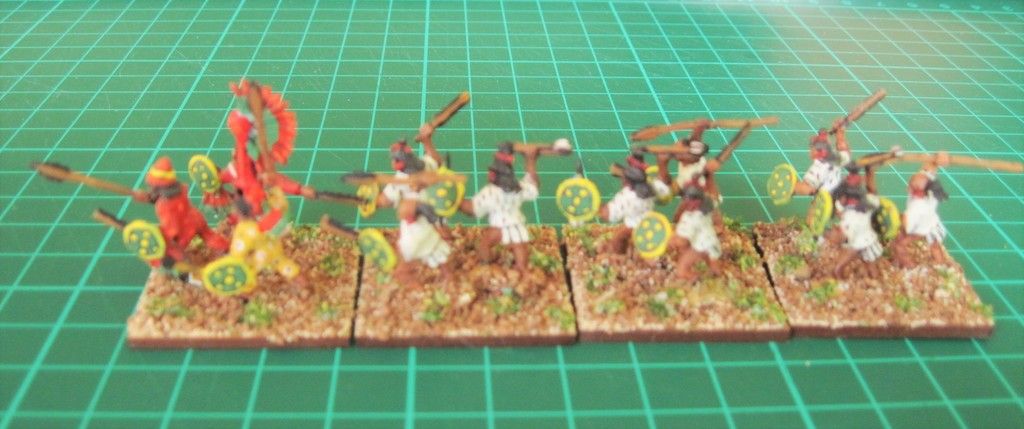
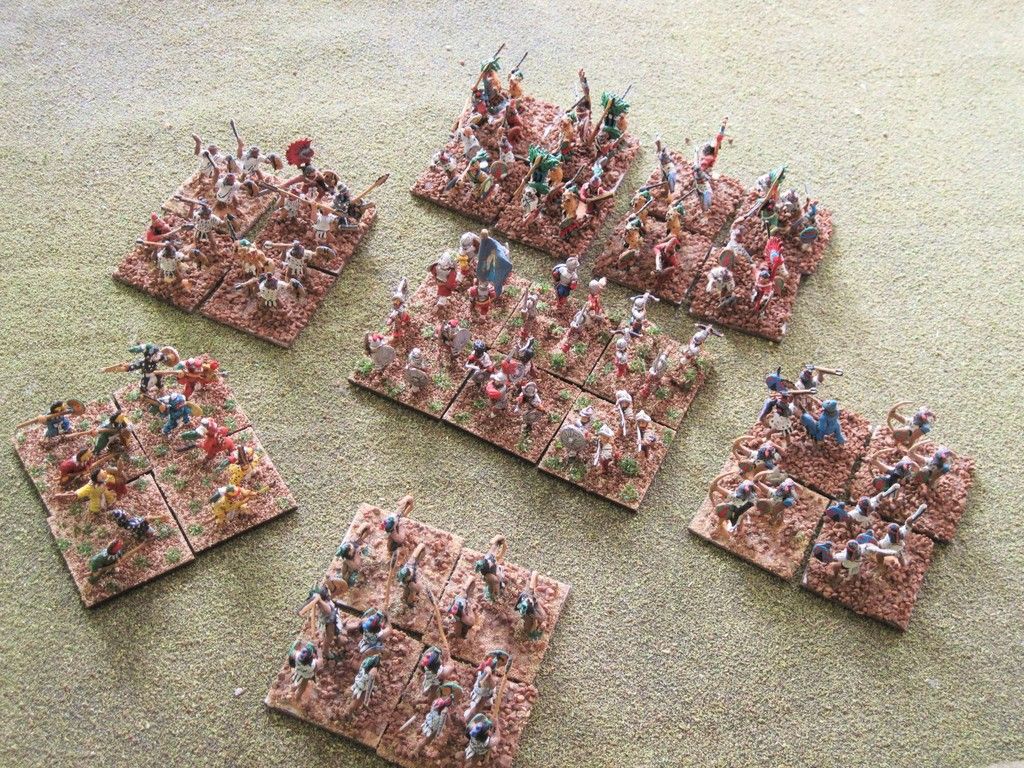
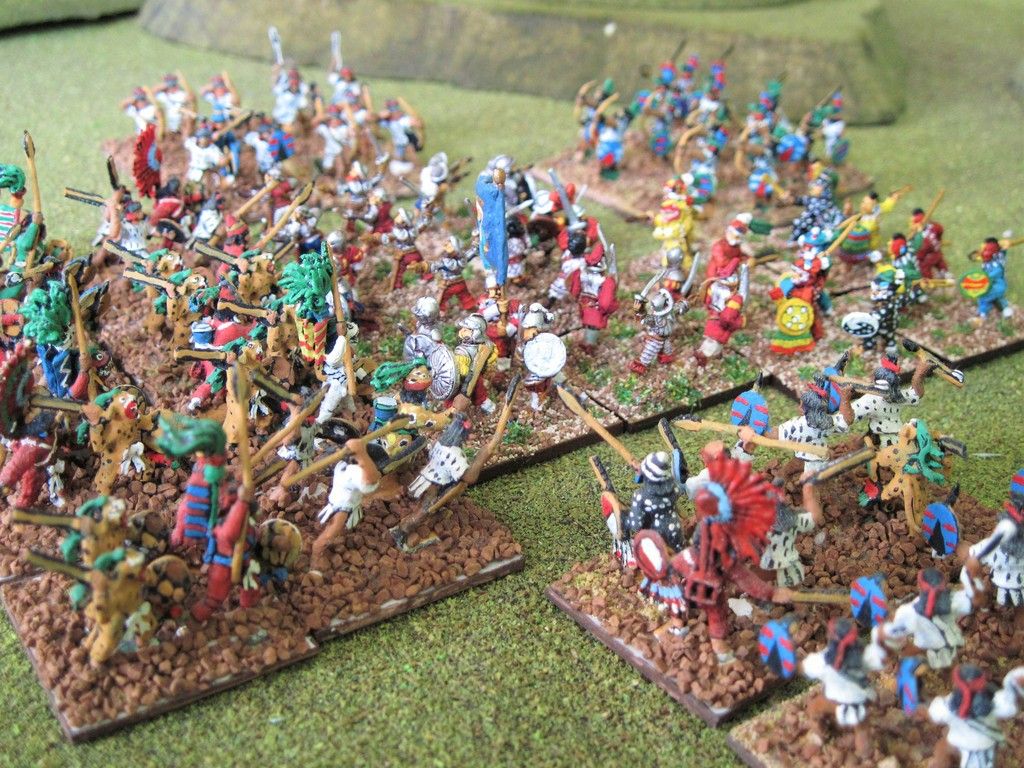
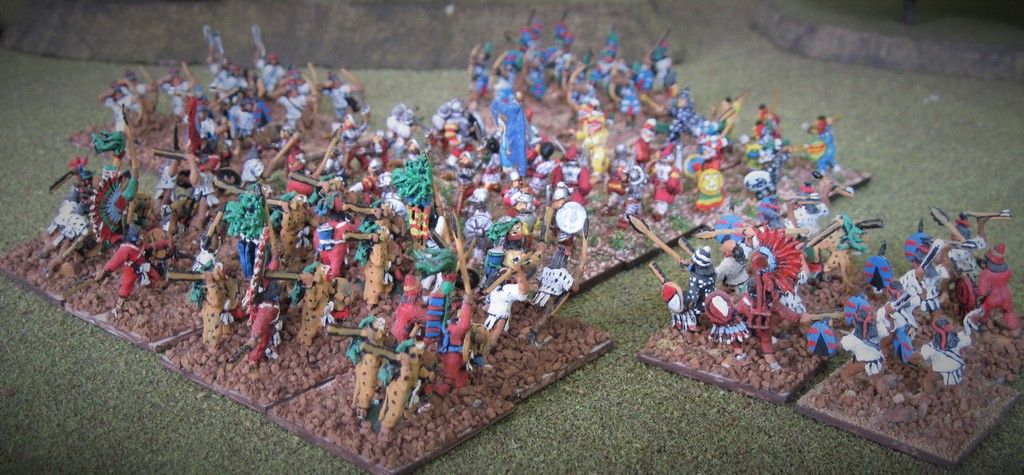
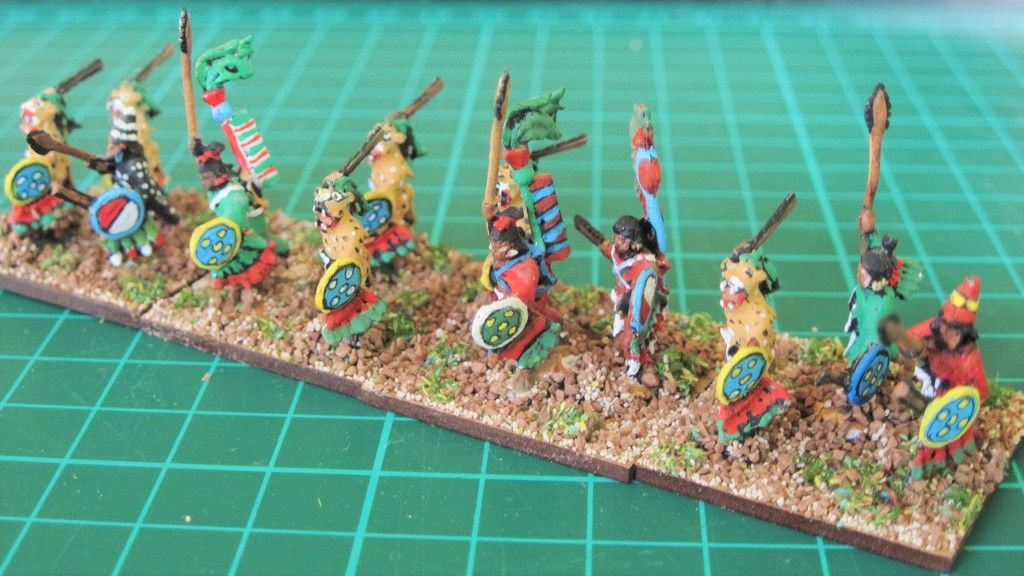
Bought in the 1980s these little fellows have mostly languished unused ever since.  Given my current focus I thought I’d repaint and rebase them.  I’m pleased enough at the end results.  So the Jaguars:


Some slingers.


More Jaguars and archers.


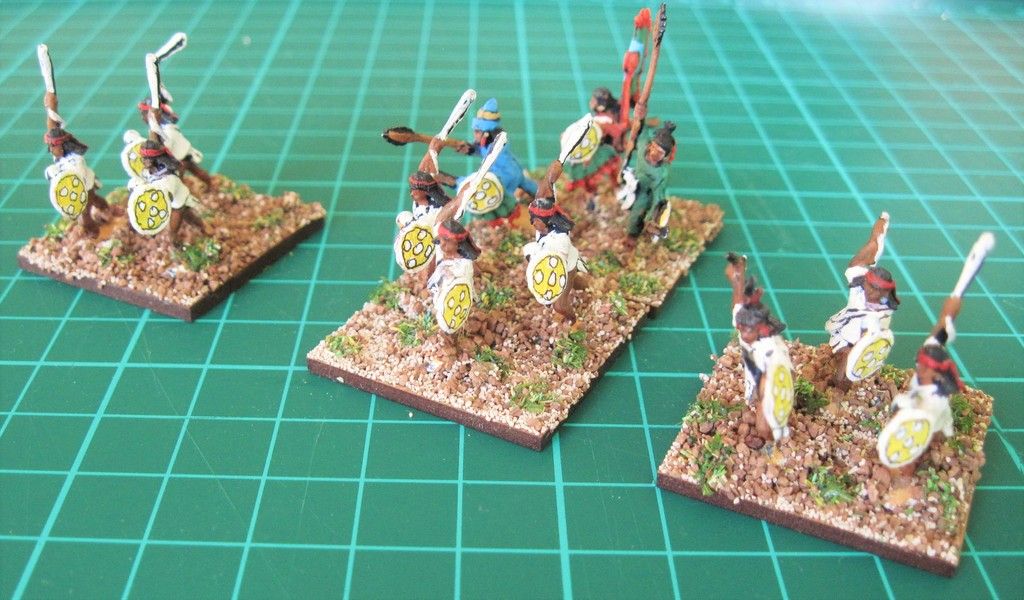
Warriors


I’m pleased to say they were done in time for today’s game-more of which soon.

Friday, 5 August 2016

The Cards

As readers know I play Piquet style games and that means using cards.

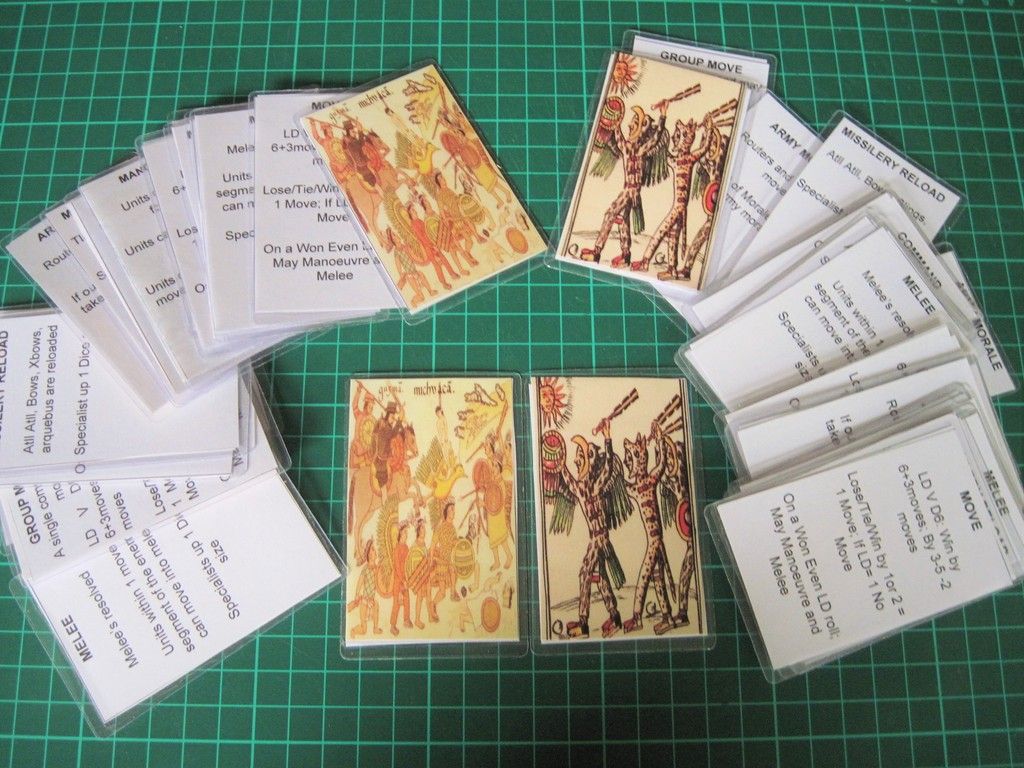
I found some nice, near contemporary, images for both the Mexica and Spanish card decks for Have a Heart.  I was very pleased to find some images of the Spanish and Tlaxcala together.  The cards are now done and you can see them here.  I'll say thanks again to Jarrovian for the cold laminating tip.


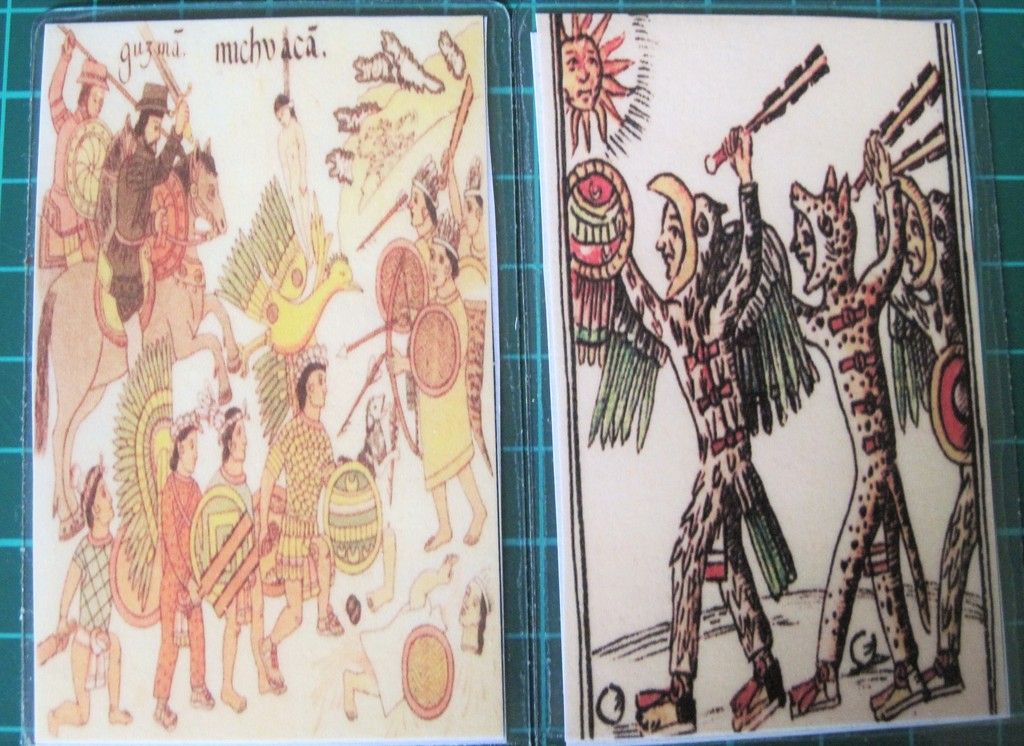
Here is a close up of the two images I eventually chose for the back cards.  Mexica on the right and Spanish and Tlaxcala on the left.


The full card deck for both sides is as follows.

Spanish and Tlaxcala
Number of cards
Mexica
Number of cards
Move
3
Move
3
Lull
3
Lull
3
Melee
3
Melee
4
Missile reload
2
Missile reload
4
Tlaxcala
Missile reload
1
-
-
Lombard reload
2
-
-
Army Morale
3
Army Morale
3
Command
3
Command
3
Manoeuvre
2
Manoeuvre
2
Tactical Advantage
2
Tactical Advantage
2
Group Move
1
Group Move
1
Total cards
25
Total cards
25

For anyone is wondering about the ’Lombard’ cards, the Lombard was a type of light, breach loading ship's gun used by Cortez on his expedition to Mexico.  The breaches could be prepared in advance and so a brisk rate of fire was possible for a while. Two Lombard cards might be excessive so I will keep an eye on that.

Wednesday, 3 August 2016

MORALE AND RELATED ISSUES

I’ve been giving some thought to how to handle morale and related issues in Have a Heart.  Lots of games allocate a numerical value to each side representing its confidence and willingness to fight.  As the number diminishes due to attrition of various sorts so the task of the player gets harder -units quit the field and those remaining are harder to motivate, eventually the army collapses unless it wins. It’s a system I like.

In Have a Heart we will talk of Morale Points and they will be generated by counting up the respective number of units and commanders and cross referencing on a table to give the number of Morale Points available to each side. Each ordinary unit and individual sub commander will count as 1, and each veteran or elite unit and General as 2.  To add an element of chance a die role will be involved in producing the final total.

As an example here is part of the Army List for the Texcoco force.  It will generate a minimum 8 Morale Points.  I should say 'Obsidian' below, represents a range of weapons, CD = Combat Die and DD = Defence Die, I hope the rest speaks for itself.  If not let me know.


Unit
Arms
Armour
Range
CD
DD
Extra
Eagle Knights
Obsidian
Atl-Atl
Cotton
2
D:12+1
D:10
Ferocious
Specialist up 1 dice for shooting
Jaguar Knights
Obsidian
Atl-Atl
Cotton
2
D:12+1
D:10
Ferocious
Specialist up 1 dice for shooting
Cuachic
Obsidian
Atl-Atl
Cotton
2
D:12
D:8
Ferocious
Specialist up 1 dice for shooting
Warrior
Mixed unit
Obsidian
Missilery
Cotton
2
D:8
D:6
Stubborn
Warrior
Mixed unit
Obsidian
Missilery
Cotton
2
D:8
D:6
Stubborn


Morale Points will be spent rallying units, paying for a fierce attack or a stubborn defence and simply just lost due to enemy action.  This means that the decision to launch a fierce attack and possibly take prisoners (which would generate extra Morale Points) has to be weighed against the wider needs of the army.  The intention is that the player in each turn must choose a tactical priority and get it right to win.

I'm also thinking of incrementally adding the 'Lull Cards' post first turn rather than having them all in the deck from the get go. Thus friction increases as combat continues. 

Sunday, 31 July 2016

Combat - Bernal's Story

Before I post the next play test I think it worthwhile to quote and examine a passage from Bernal Diaz.  It describes the first Spanish encounter with the Maya who were a much more serious proposition than the pretty much unarmed natives of Cuba. That said it is fairly typical of his descriptions of combat between the Spanish and other native opponents.  The entire action, and it was an intense one, lasted an hour

“When their squadrons were formed up they surrounded us on all sides and poured in such showers of arrows and darts, and stones thrown from their slings that over eighty of us soldiers were wounded, and they attacked us hand to hand, some with lances and others shooting arrows, and some with two handed macana swords and they brought us to a bad pass.  At last feeling the effects of our swordplay, they drew back a bit, but it was not far, and only enabled them to shoot their stones and darts at us with greater safety to themselves.”


We learn, as you can see, that the Maya were organised in squadrons and that their numbers enable them to surround the Spanish. Maya missilery posed a real threat and on the back of its effect the Maya attempt to overrun the Spanish. Even at the closest range missilery persists. The Spanish swordplay causes the Maya to pull back and missilery resumes.  Both sides are clearly brave and under the control of their commanders.

“While the battle was raging the Indians called out in their language, "let us attack the captain and kill him” and ten times they wounded him with their arrows; and me they struck thrice, one arrow wounded me dangerously in the left side piercing through the ribs.  All the other soldiers were wounded by spear thrusts and two were carried off alive.”


The Maya are now coming in for the kill, they have identified the Spanish captain and know his death will demoralise the Spanish.  Clearly they are now at very close quarters but missilery is still part of their tactical repertoire as we see by Bernal’s wound and those of others. We can note that Bernal's cotton armour could not stop an arrow at close range. The Maya are taking prisoners a sure sign they are winning the melee.  

Additional squadrons of warriors arrive bringing a large supply of arrows and food and drink.

“Our captain then saw that our good fighting availed us nothing.  All of our soldiers were wounded with two or three arrow wounds, three of them had their throats pierced by lance thrusts, our captain was bleeding from many wounds and all ready 50 soldiers were lying dead.”


The Spanish captain knows he is getting beat and that if he stays in position all will be captured or killed.  The Spanish losses are very high although we are not told which weapons had killed them. We can see that close range archery is effective and that the Maya had quickly identified the throat as a vulnerable unarmoured area.

“Feeling that our strength was exhausted we determined with stout hearts to break through the battalions surrounding us and seek shelter in the boats that awaited us near the shore; so we formed in close array and broke through the enemy.”

The Spanish are beaten and now have to make a run for it.  They close up, so clearly they had been in a looser formation beforehand, probably necessarily so because of the disparity in numbers.  Once in close array they successfully fight their way to the boats although combat continues until they row to deep water.

I want Have a Heart to be able to reflect this sort of fighting and when you read the next play test you can judge how well that has been achieved so far.  Before that, or maybe after there will be a couple of army lists and some thoughts on how Have a Heart is intended to work.
Thursday, 28 July 2016

Williamites

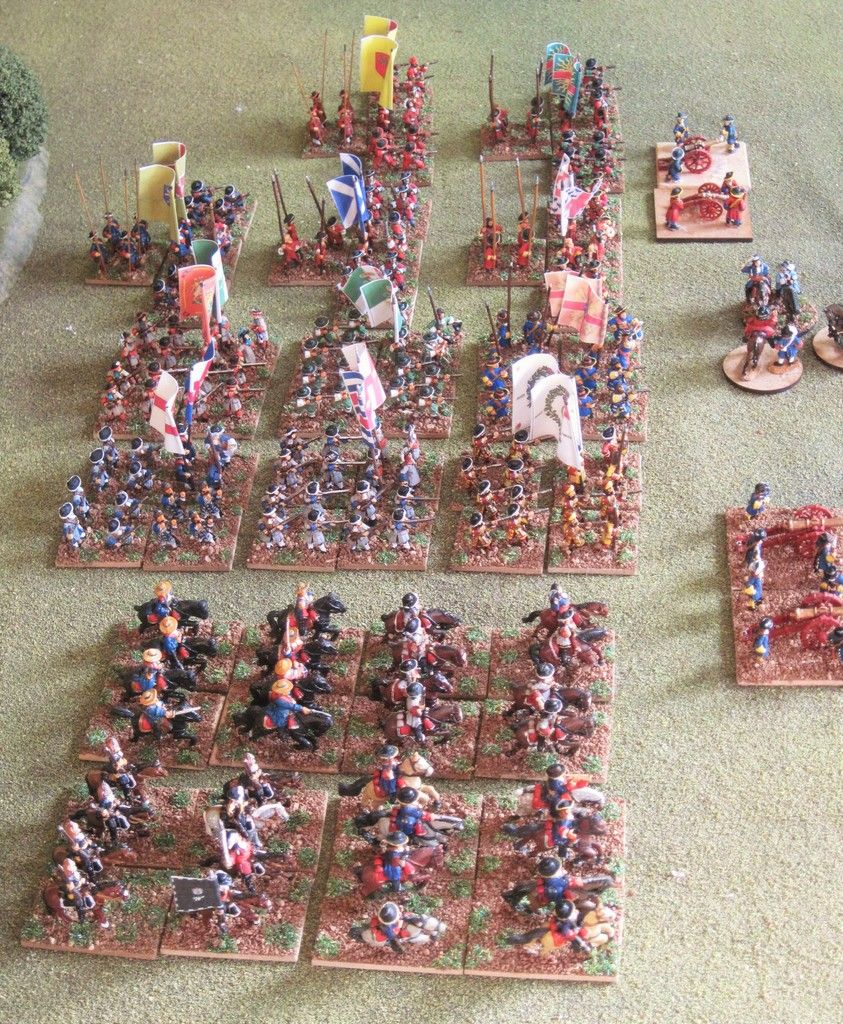
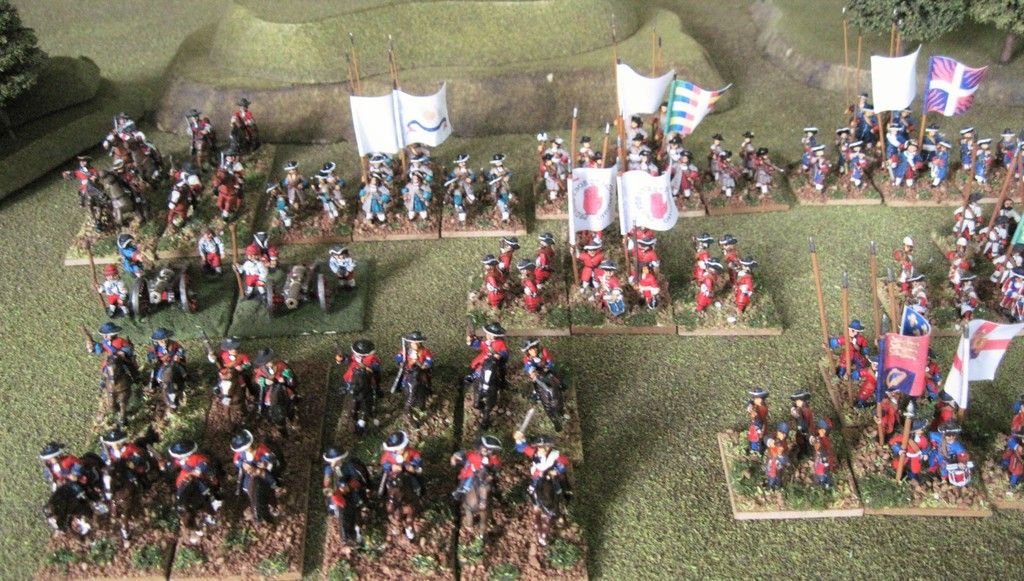
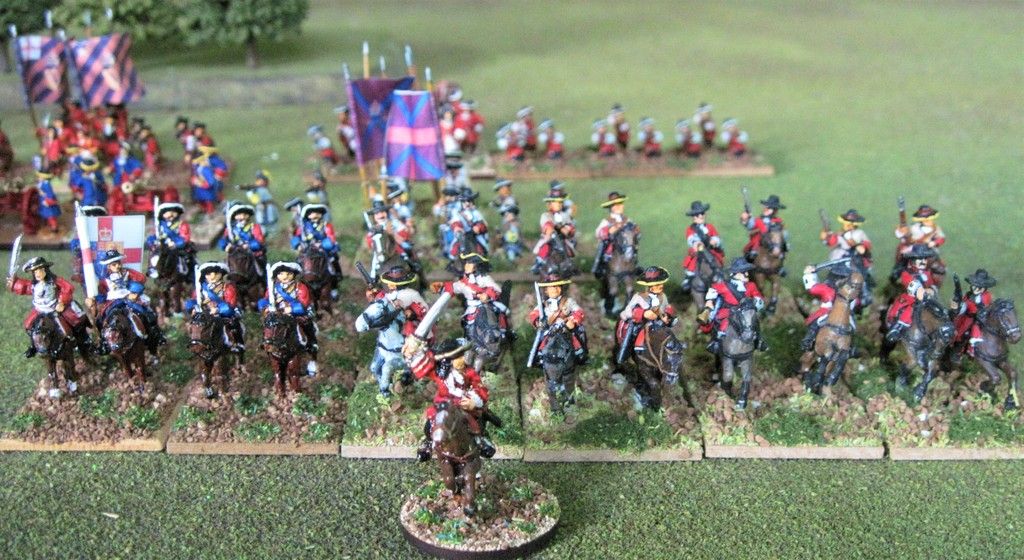
Here is William's polyglot army horse, foot and guns. I will shortly add another battery.


From front to back the Earl of Portland's Horse AKA the Oxford Blue's and some Dutch Squadrons seconded by the Garde Parde and Eppinger's Dragoons.  Hugeonot infantry to the side.


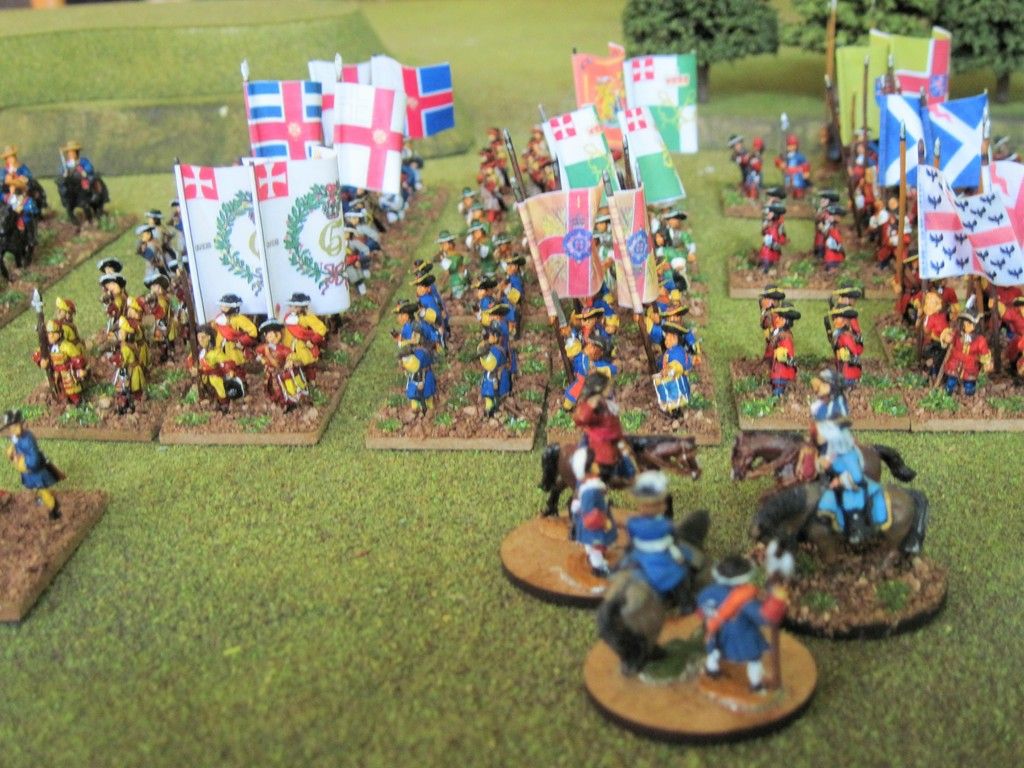
Danish Guards in yellow  and Dutch Guards in blue seconded by more Danes and the exiled Hugeonots. The Danes, who have abandoned both the matchlock and the pike, are thought to be the best infantry in Europe at this time.  Clifton's, McKay's and the Earl of Bath's regiments on the right.


A good view of some of William's British regiments and a mixed battery.  The English and Scot's regiments like the Irish still favoured the matchlock and pike.


The figures are all Essex and Irregular 15mm and the flags are from Ray at Don't Throw a 1.  I will add more Garde Parde and some Danish squadrons but this army, apart from cavalry flags, is pretty much done. I hope you like it.

Tuesday, 26 July 2016

Jacobites

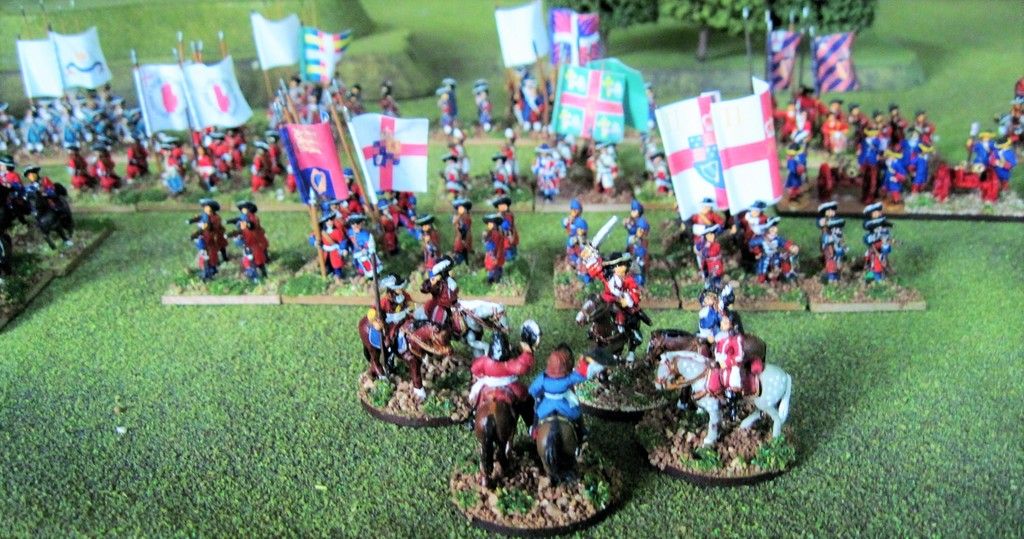
Here's the army.  It needs three bases of Dragoon horse holders, a bit of basing and some cavalry flags otherwise it is good to go.  Of course I may want to add the Lord Grand Prior's regiment too.


In this pic we can see some of the far famed Irish cavalry, a battery, Gordon O'Neil's foot regiment and in the rear line the important French contingent.  To the right of the pic are the Foot Guards.


The generals are having a conference in front of both battalions of Foot Guards, I need to re-size a flag there, further back you can see lords Antrim and Bellew's  regiments. 


Here is Sarsfield with some more of the cavalry.  In the background we can see Lord Louth's regiment and just about see the Dragoons.


At some point I will write about the relative strengths and weaknesses of the both sides in the Williamite War and we will see a game or two. For the moment though I'm happy enough to be able to present the armies to you.  

I am very keen to do some games in Scotland and I do have the figures so we will see them too.  The fine flags you can see are mainly from Ray at Don't Throw a 1 and are free!  Next up the Williamites.

Sunday, 24 July 2016

What’s Next?

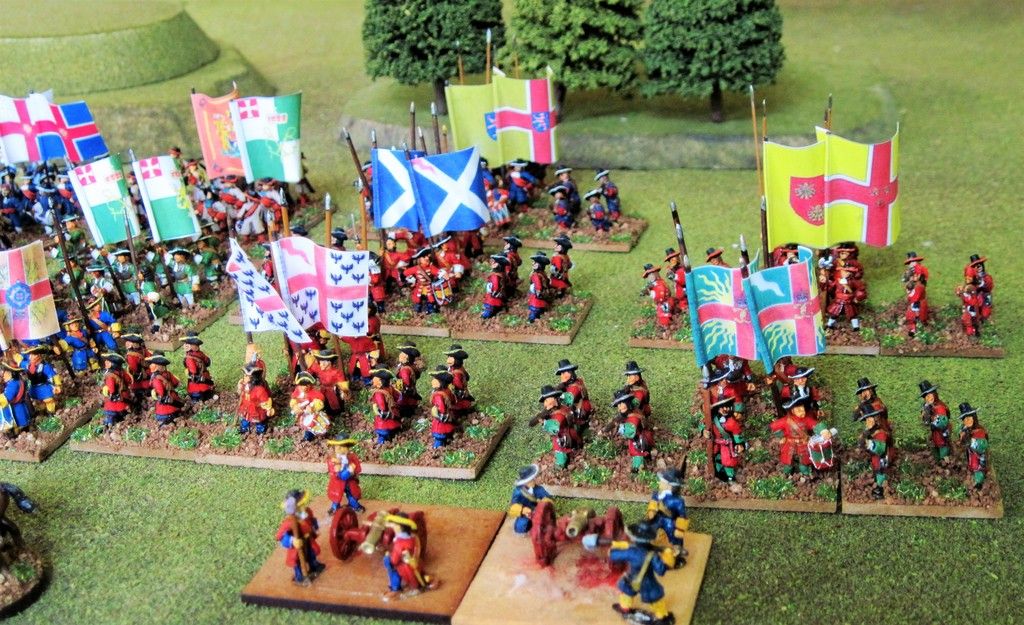
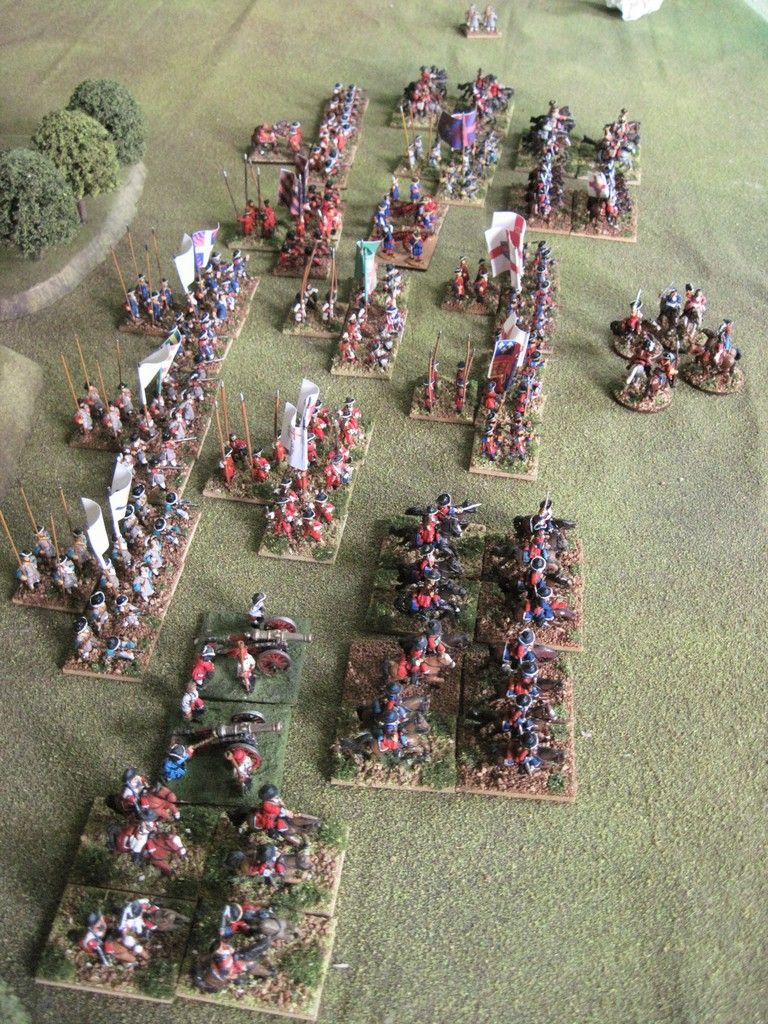
I mentioned last month that I’m finishing off armies bought, it seems, aeons ago and now it’s the turn of the Jacobites and Williamites.  I began painting these in 1997.  Most of the figures are Essex or Irregular and they match nicely.  Since I needed to put them on the table to see what needed doing I thought I might as well take a couple of pics so here they are – Jacobites first.


And Williamites.

If you are interested in the Williamite War there will be more here on both armies shortly. 

My current focus on Mexico continues and next up will be an examination of an extract from Bernal Diaz concerning the first Spanish encounter with the Maya. It’s by way of scene setting for the second play test of Have a Heart.