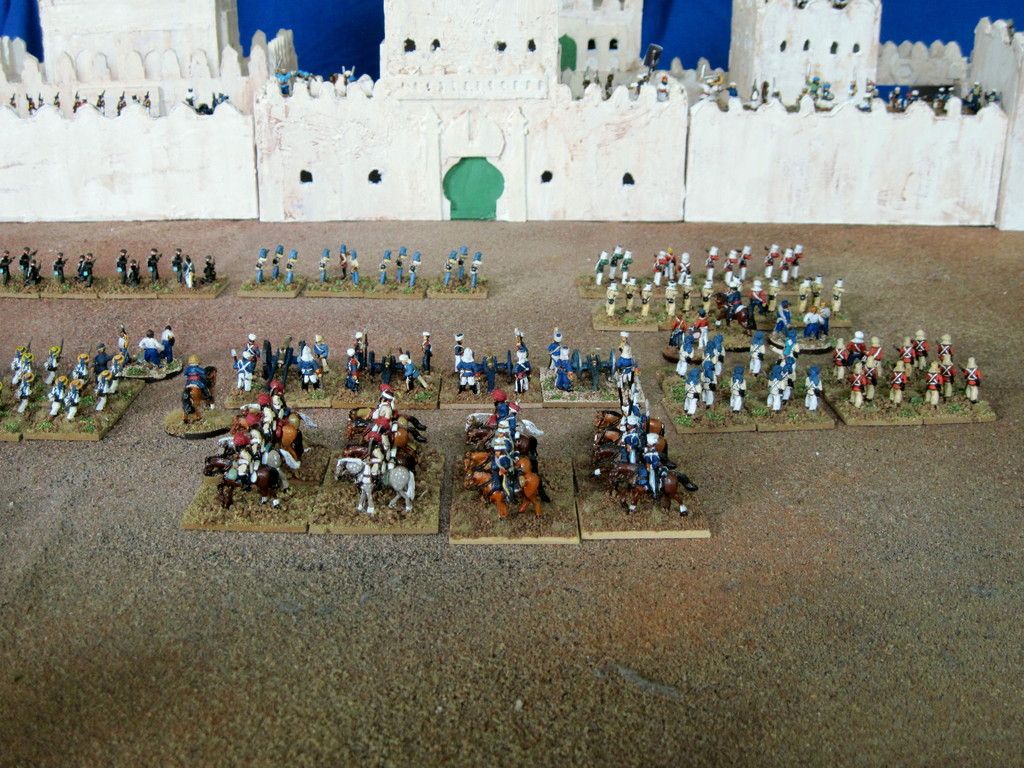
Thursday, 21 April 2016

The Khalsa and the first Anglo-Sikh War


The first Sikh War was as anyone interested knows was a narrow run thing.  The Sikh high command (none of whom were Sikhs) were determined to ensure a British victory had it been otherwise history may have been changed.

So bearing in mind the treachery of the high command how are we to game the first Sikh War?  I use Piquet Field of Battle and it offers a simple but elegant solution. The Sikh commanding general can be rated as abysmal which ensures frequent gaps in the flow of orders and subsequent disruption of the Sikh Battle Plan.  The opposing British general I rate as average. I find it works well.
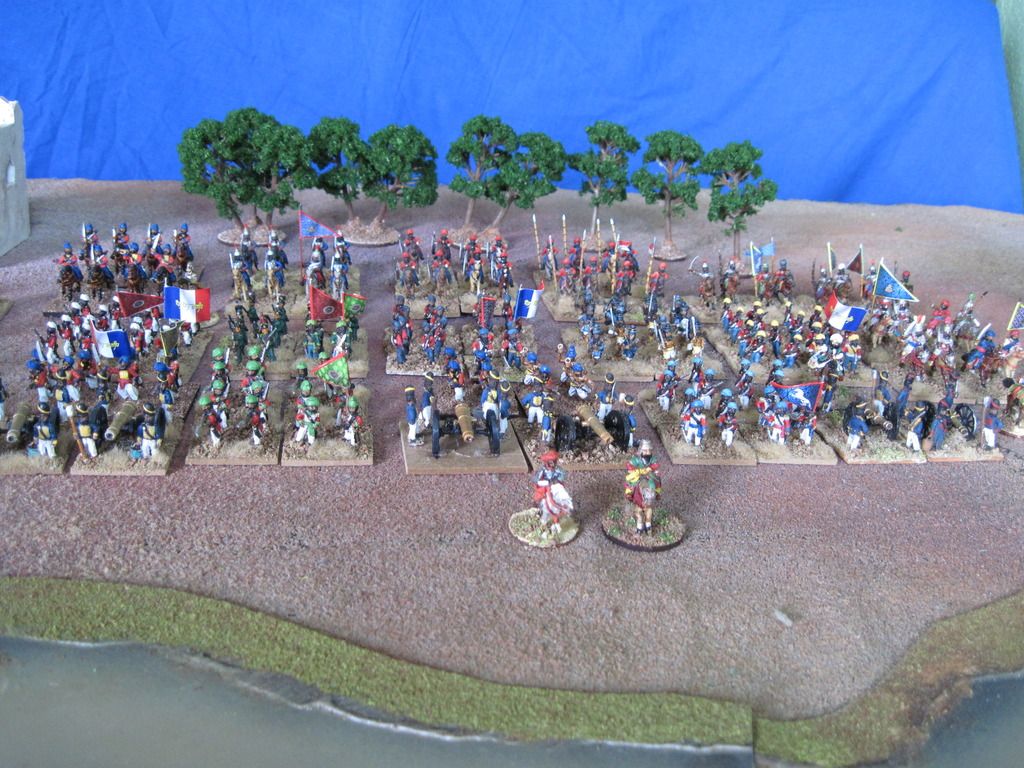

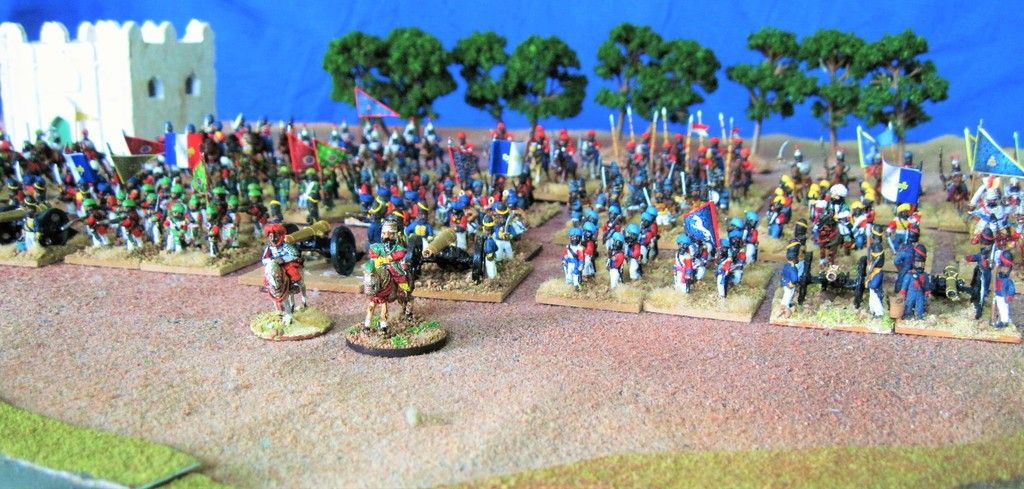
The Sikh army was good even by European standards and comprised of regular, the Khalsa, and irregular troops. Taking the regulars first we can note the Sikh artillery was first rate, the infantry was as well trained and equipped as the British and highly motivated. 

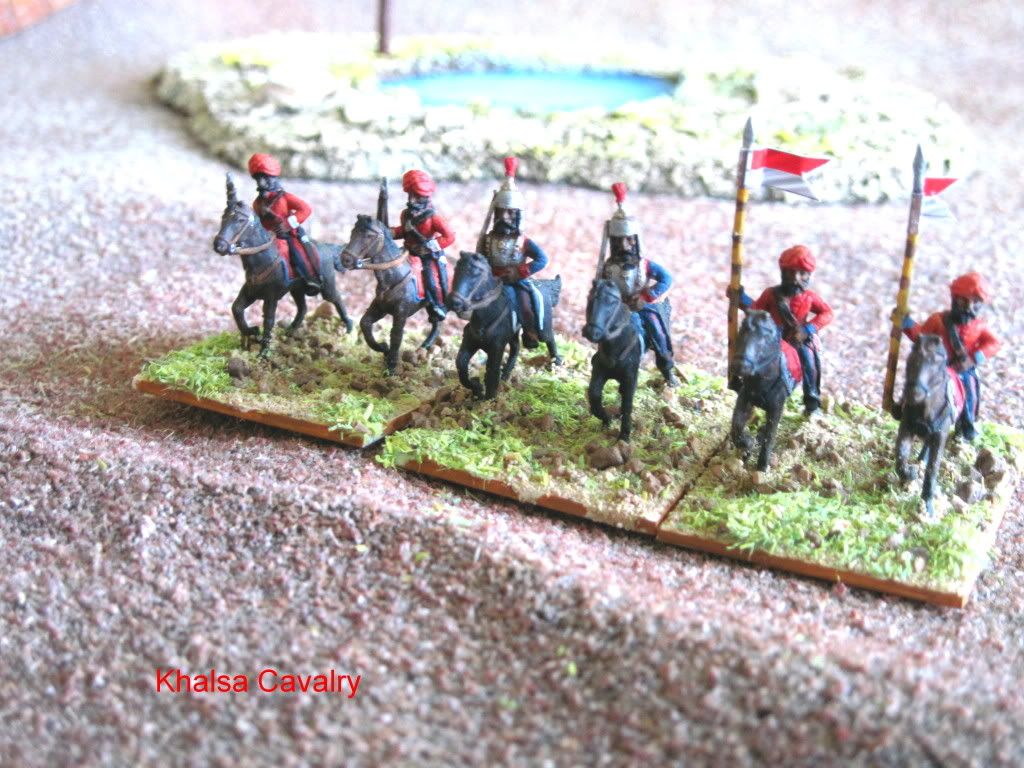
The regular cavalry although well trained was not as well mounted as it could be and lacked the prestige of the other two arms. It fielded in the European fashion lancers, dragoons and cuirassiers.


The irregulars consisted of three elements firstly the Gorchurra cavalry raised from the rural gentry, brave, skilled, well equipped and often armoured.
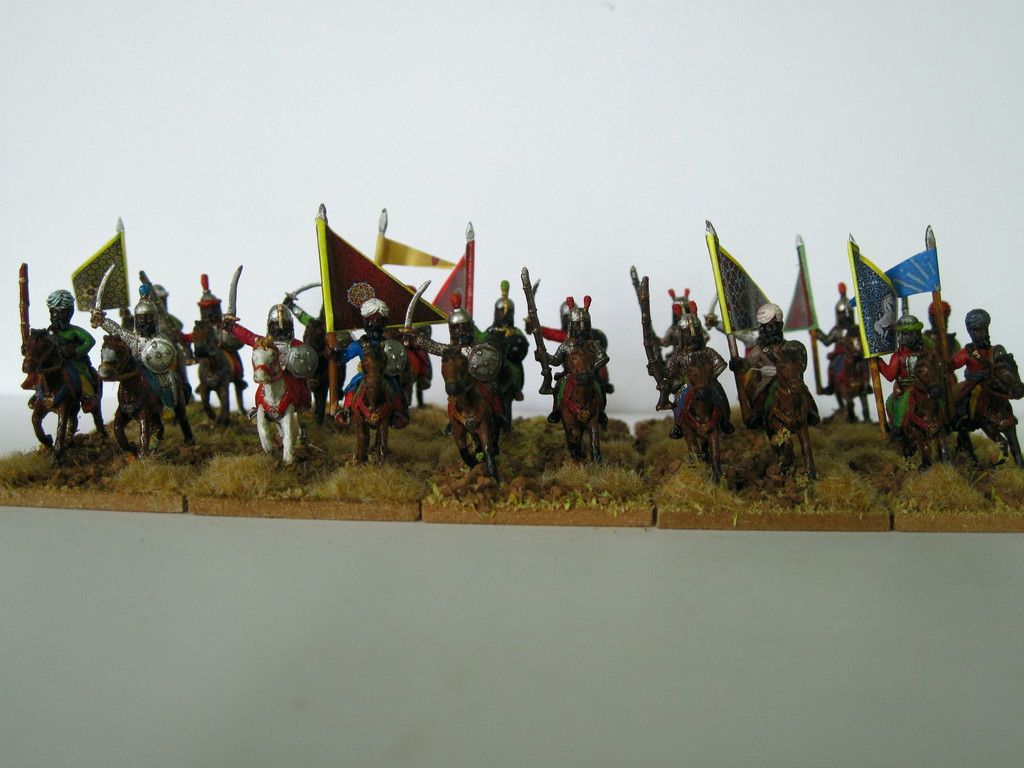

Secondly the Alkali devotees of a Sikh religious sect and thirdly Sikh irregulars who rallied to the cause.
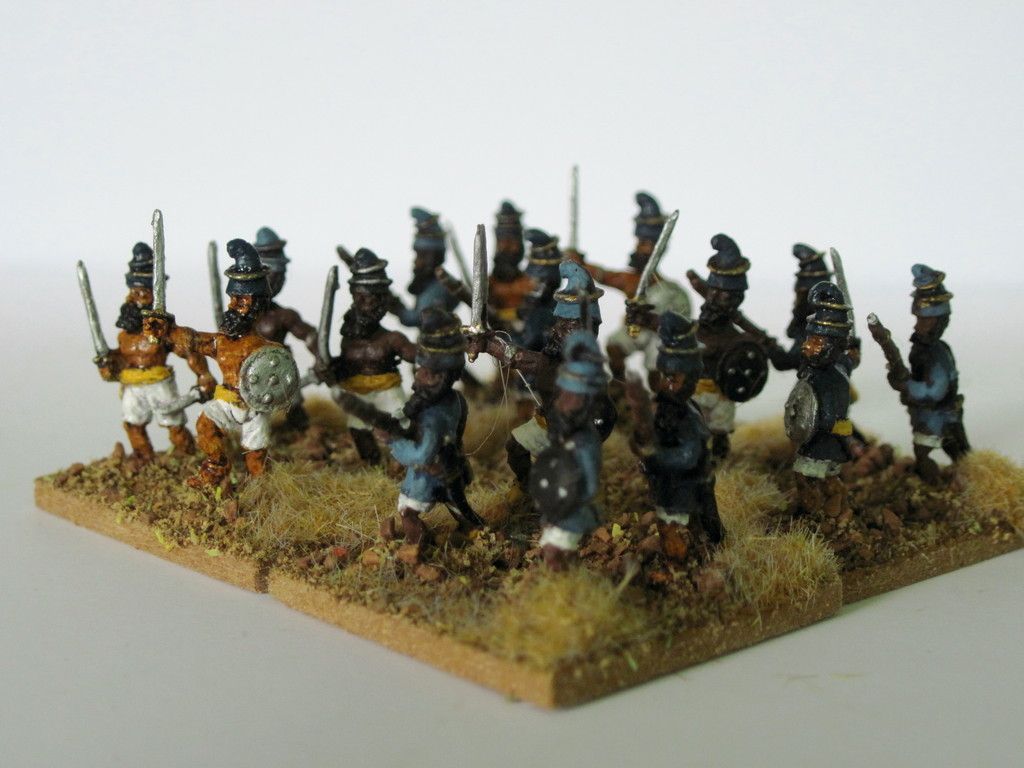


For my Sikh list, to be published next, I have drawn on Amarpal S. Sidhu’s The First Anglo Sikh War a must read for anyone interested in the period.  Its currently in paperback and so is very affordable.

Wednesday, 20 April 2016

AMBUSH!

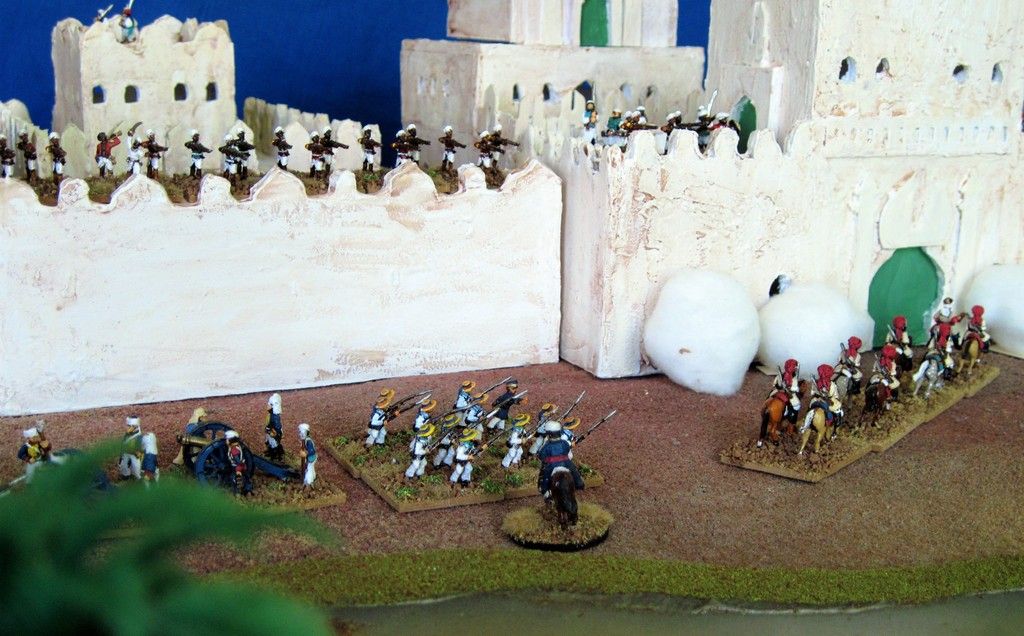
By marching by night and resting during the day Wilson had conserved the strength of his white troops.  As the dawn broke Krishnapur came into view a few of the Rani’s rabble could be seen on the walls.  

She knew he was coming. He would be relieved when the gold changed hands it had been guarded by the Ghurkhas and kept in a bullock gari.  No one was supposed to know about it but the army leaked like a sieve. Once inside the city the 53rd had been ordered not to leave the gate house.  He would do the diplomatic with the Rani, hand over her present and before she knew it he would hold the great gate.


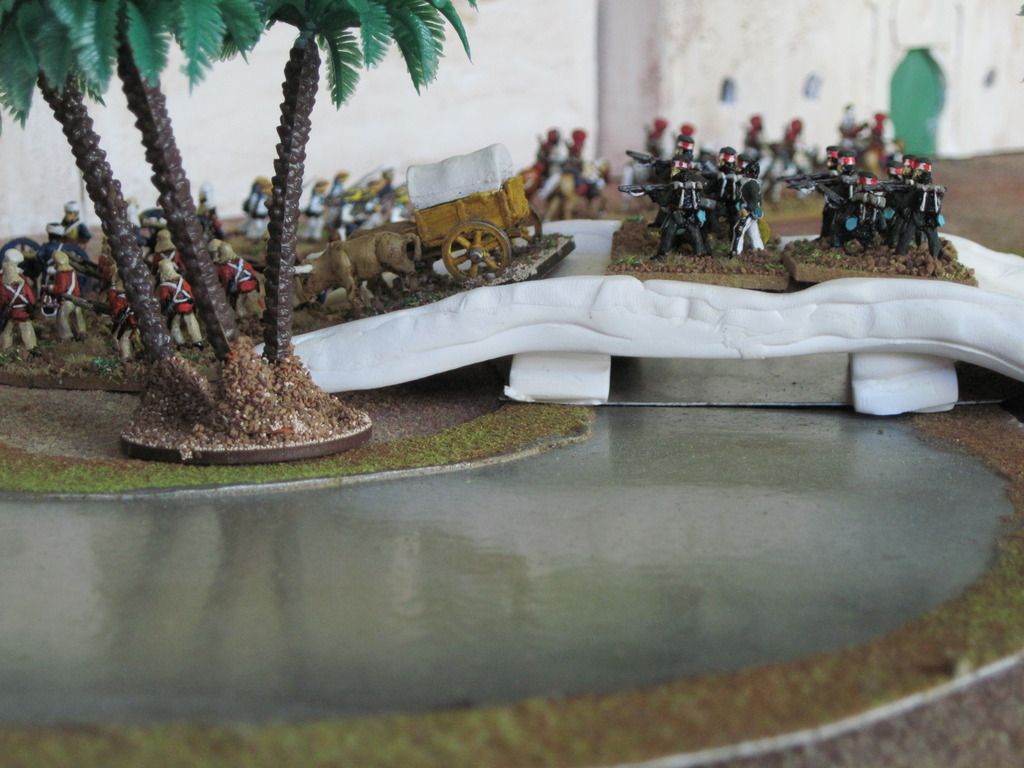
Now in the shadow of Krishnapur’s walls he noticed at the rear of the column a bottle neck at the bridge and that the city gate was closed.  Perhaps the Rani was about to provide a dramatic welcome in the native style.


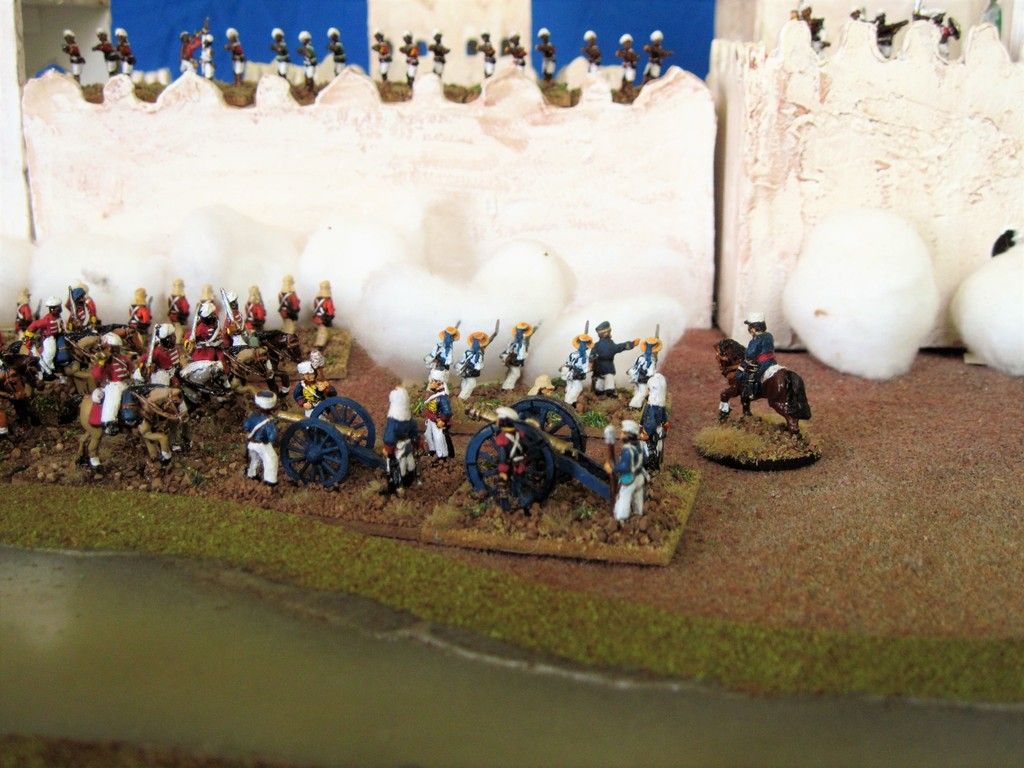
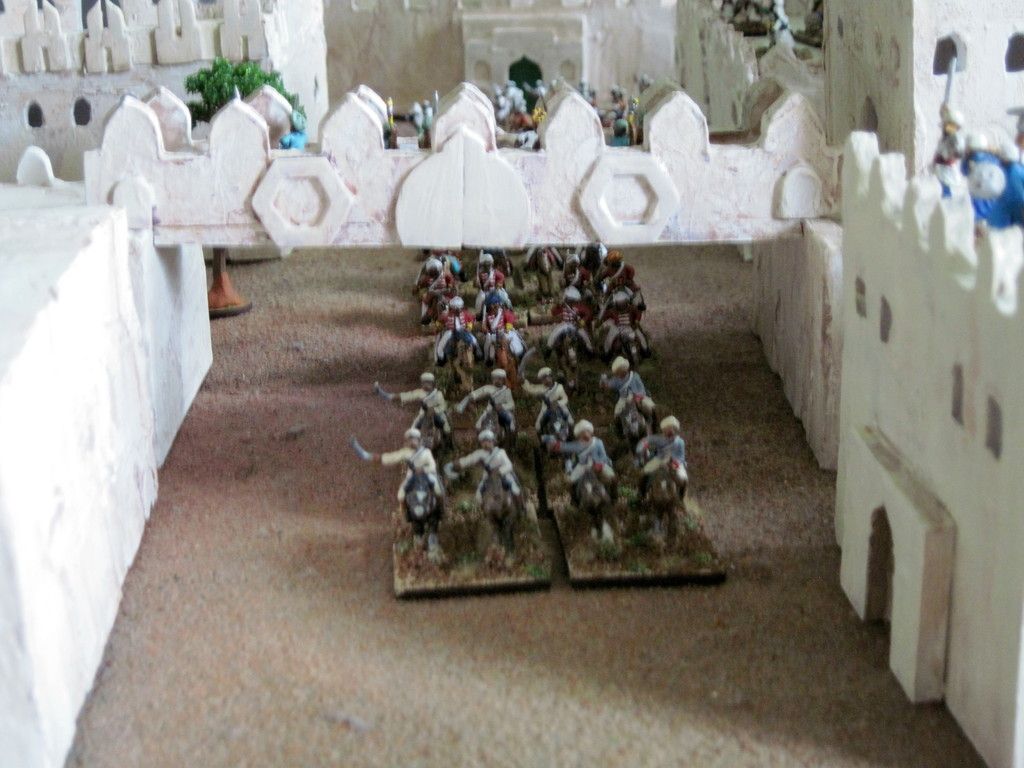
He saw the muzzles of the cannon appear before he heard the roar.  Then the air was full of canister and when the smoke lifted the Sikhs were gone.  A bugle rang out and the walls were suddenly lined with Pandies giving volley after volley.
  

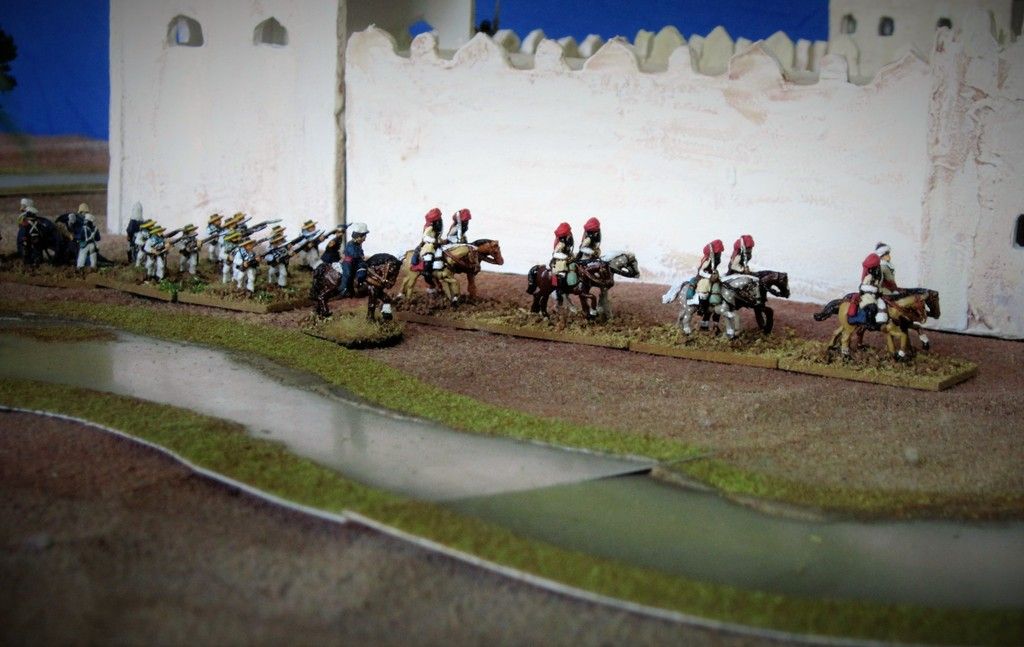
He ordered up the guns and shook the sailors and the 53rd out into a firing line intending to supress the Pandies and batter the gate down before taking the gate house at bayonet point.  Then mutineer sowars had appeared out of nowhere and cut down his gunners before riding off again.
 

That was it, the position was untenable and he had retreated back over the bridge.  He had to leave the guns behind-there would be trouble over that. The Ghurkhas though, mindful of their orders had saved the gold.  The 53rd and what was left of the sailors formed face but the Pandies had not attempted a pursuit.


In Field of Battle terms Wilson simply ran out of Army Morale Points and had to withdraw.  The Rani got the cards she needed when she wanted them and rolled high for firing.  

Monday, 18 April 2016

Brigadier Wilson's Column

As General Rose explained the task of garrisoning Krishnapur must be performed with some delicacy past slights must be ameliorated and the hope of redress fostered.  A suitable gift of bullion would set the right tone.  Yet the threat of force must be evident should the Rani be inclined to be uncooperative.

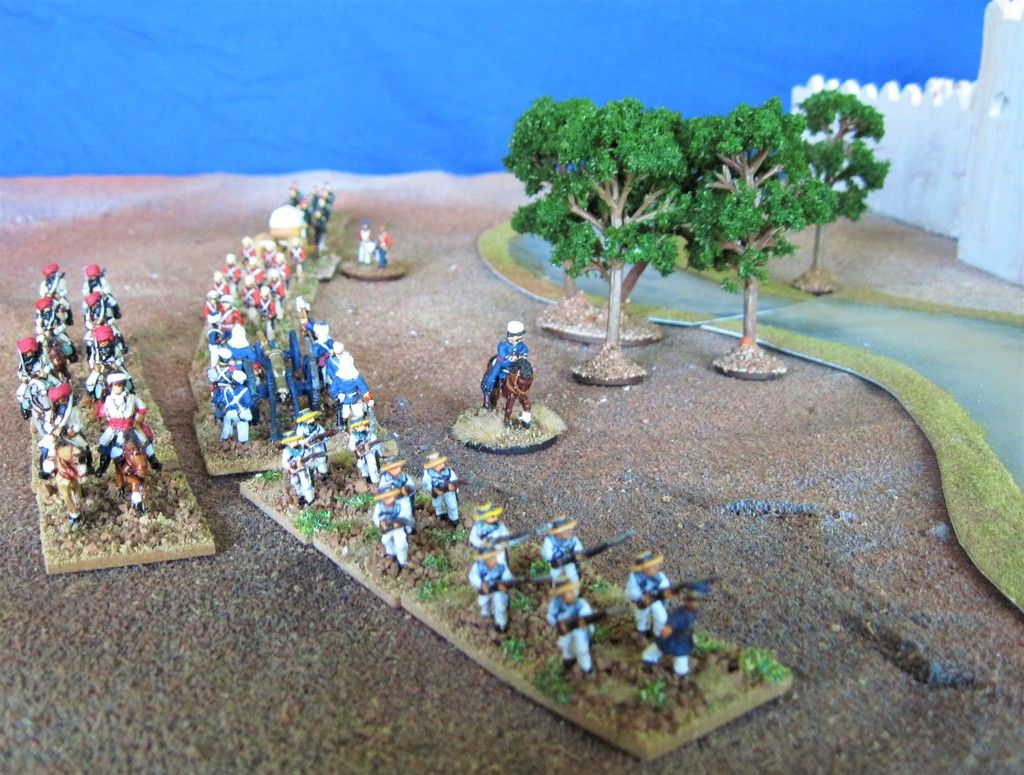
He Wilson would command a brigade comprised of the 53rd, the RN contingent with the new Enfield rifles, a fine battalion of Ghurkhas’, a battery of foot artillery and a 4 squadrons of Sikh horse.  All, in all enough to overawe the Rani’s rabble.


Of course no one had actually been in the city of Krishnapur but by interrogating the natives a map had been drawn.  There were two strong points in the city suitable for the garrison a fort adjacent to the Rani’s palace and the great gate of the city.  The general thought the great gate the better from there the guns could dominate the city and if it came to it shell the palace.  But it need not come to that.  Also should things turn ugly reinforcements would not have to fight their way through the city to the garrison, it wouldn’t come to that either.  Best of all the gate controlled the river crossing and that was what really counted.

So the great gate it was and could Wilson send the Sikhs back one he was in situ?  The Residency command was still short of cavalry.

The Rani Strikes Back


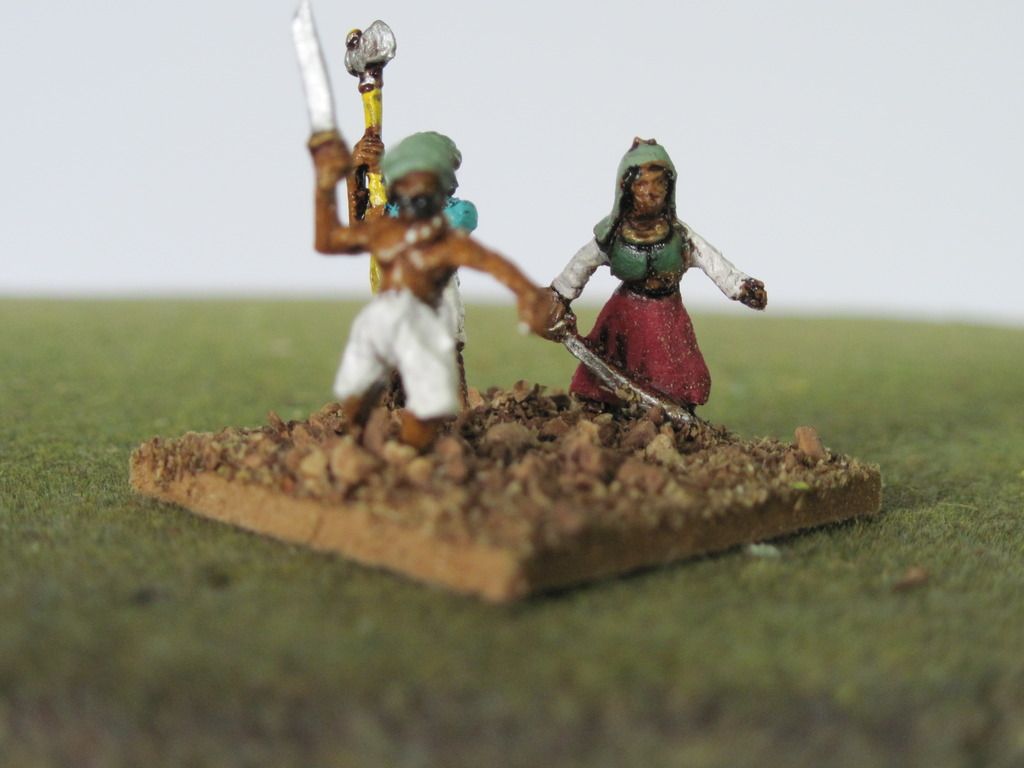
The Rani or was she a Begum? Saw the Mutiny as an opportunity to redress the many oppressions and exactions put upon her and her people by the Company.  As a hereditary prince she could rely on the support of her people if she went to war.  Gallant horsemen would follow her banner and her tripartite guard of hereditary soldiers, oath bound Ghilzais and Baluchi swordsmen would fight and if necessary die for her.  Her artillery though was ancient and probably could not be moved from the city walls.  Latterly the Wahhabis of the city had offered themselves as holy warriors willing to destroy any Ferenghees she cared to name.  All in all, it was not enough and as a British column approached with the intention of garrisoning her city she reviewed her forces.


Unit
Armament
Combat Die
Defence Die
Short Range
Medium
Range
Long Range
Matchlocks
Musket
D8
D10
0-2
2-4
4-6
Ghilzais
Jezzail
D12+1
D10
0-4
4-6
6-8
Baluchi
Swords
D10
D8
0-2
0
0
Wahhabis
Swords
D10
D8
0
0
0
Zemindaris’
Carbine
D10
D6
0-1
1-2
2-3
Zemindaris’
Carbine
D10
D8
0-1
1-2
2-3

The long range Jezzail of the Ghilzais would be an advantage and from behind the walls her matchlock men would fight effectively.  The Baluchi and Wahhabis would charge bravely but without artillery there was little hope of success.

Then the Sowars and Sepoys entered the city proclaiming their allegiance to her family and begging her to lead them against the British.
 
Since their leader Ahmed Khan had looted the treasury before leaving his life with the Company the Rani graciously accepted the money and his services and decided to fight.

Unit
Armament
Combat Die
Defence Die
Short Range
Medium Range
Long Range
Sowars
Carbine
D10
D6
0-1
1-2
2-3
Sepoys
Musket
D10
D6
0-2
2-4
4-6
Sepoys
Musket
D8
D6
0-2
2-4
4-6
Battery
9lb Smoothbore
D12
D8
0-5
5-10
11-18
Battery
9lb Smoothbore
D12+1
D8
0-4
4-8
9-16

The Sepoys and Sowars were trained soldiers and the artillery men were perhaps more skilled than the British. Still she would take no chances.
Indian Mutiny
I find the Great Rebellion also known as the Indian Mutiny endlessly fascinating and I think Piquet’s Field of Battle (FOB) provides an excellent way to game it.

Here is my list for a medium sized British force.  All are rated as per FOB but should be easily converted to other rule sets.  The keen eyed will notice I have included carbines which is very non FOB but it was an Indian tactic and so it’s here.  Horse can fire mounted in my games. 

The firing ranges given below are taken from Piquet’s Hallowed Ground in preference to those in FOB this is solely because I felt they gave a better flavour for the period. Some British units are armed with the Enfield rifle which was a real advantage occasionally thrown away by officers who preferred a close range volley followed by the bayonet.  Sikhs were an important element in British forces but were, in the opinion of many officers, more interested in loot than glory.  I rate them as fierce (Regular) but not quite as motivated as the British.

The British are all rated as regulars with the exception of the Highlanders who I choose to consider crack.  This is because Sir Colin Campbell consistently used them for do or die situations and because it adds variety to the game.

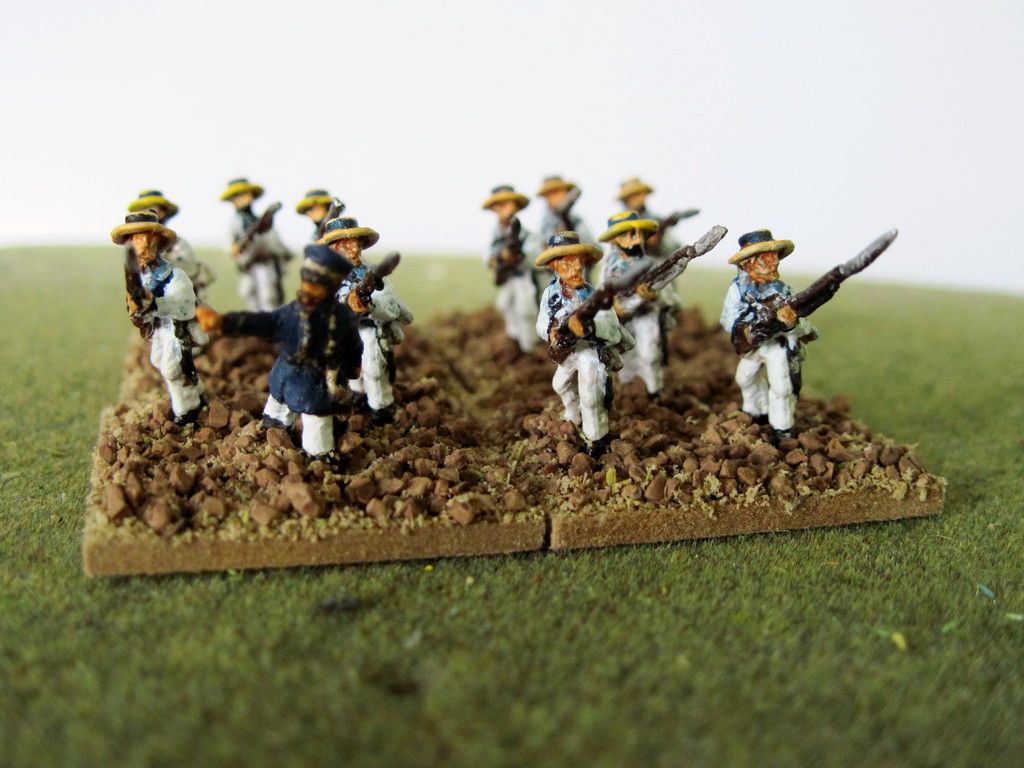
A naval contingent can be fun.

 For bigger games I will add more Queen’s regiments in full uniform directly from my Crimean collection.  What I really need is a battalion or two of loyal Sepoys and in due course I’ll add them.

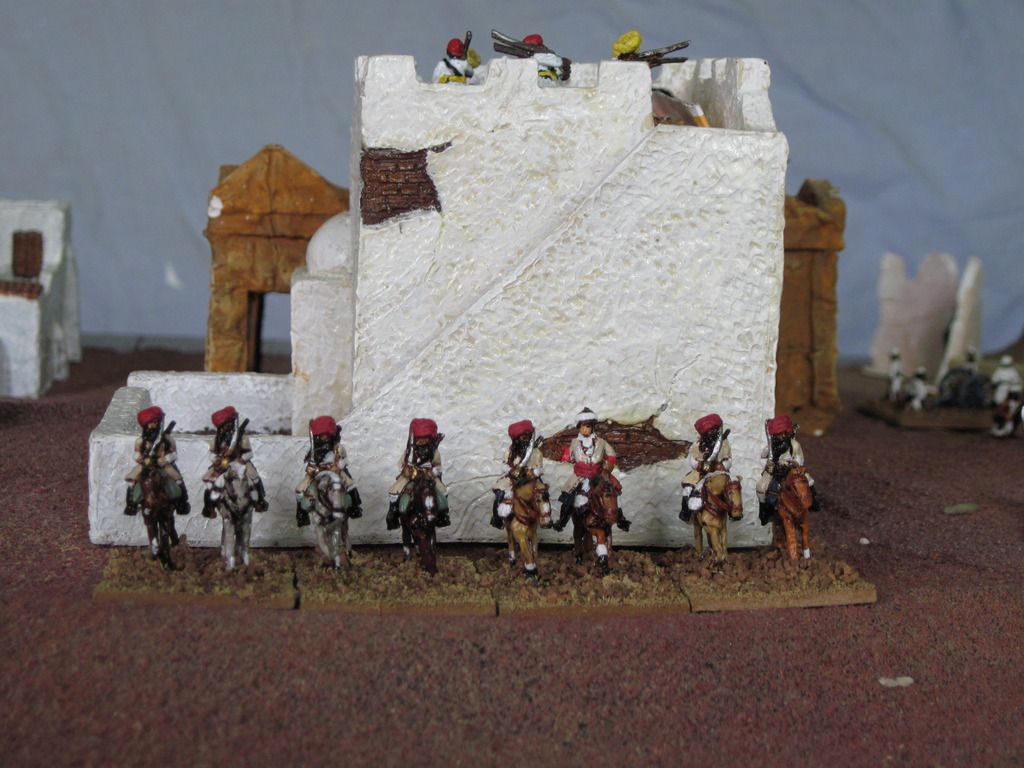
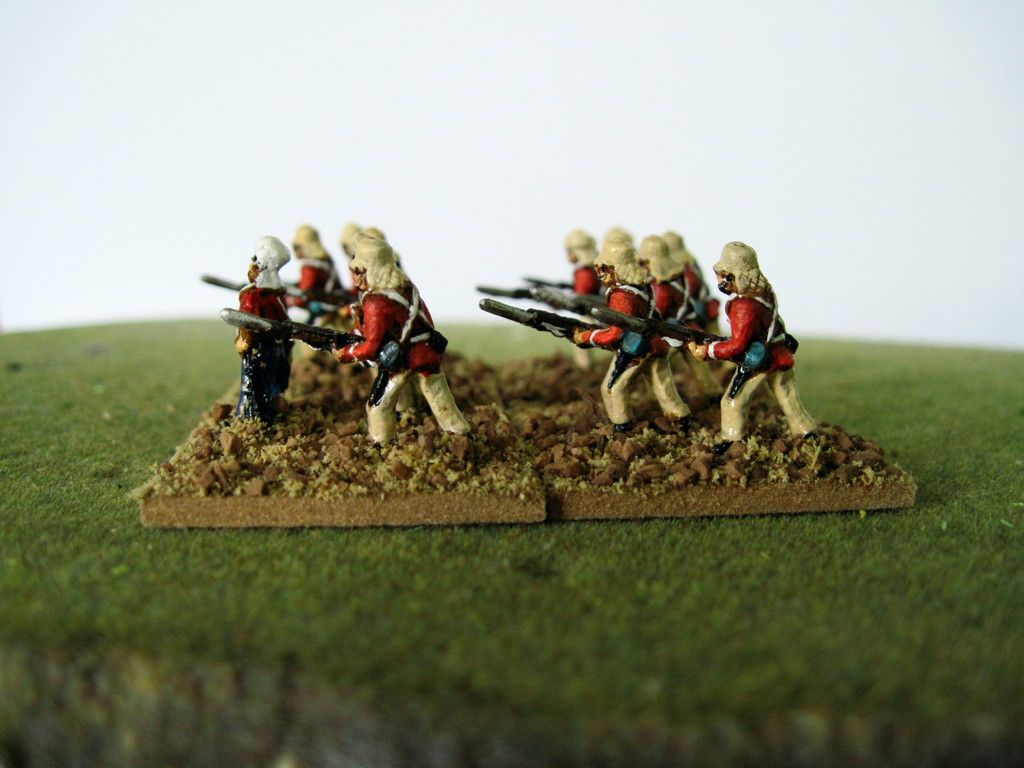
Now let’s have a look at the toys (all are 15mm and supplied by Black hat, Dixon, Irregular and QRF) as they bite off more than they can chew by investing a city.


Lastly here are the unit ratings.
Unit
Armament
Combat Die
Defence Die
Short Range
Medium Range
Long Range
Neil’s Blue Caps
Musket
D10
D6
0-2
3-4
5-6
Highlanders
Rifle
D12+1
D8
0-3
4-6
6-8
84th

Rifle
D10
D6
0-3
4-6
6-8
53rd
Musket
D12
D6
0-2
2-4
5-6
30th
Musket
D8
D6
0-2
3-4
5-6
Sikhs
Musket
D12+1
D4
0-2
3-4
5-6
Sailors
Rifle
D10
D6
0-3
4-6
6-8
Ghurkha’s
Musket
D10
D6
0-2
3-4
5-6
Sikh Horse
Carbine
D10
D4
0-1
1-2
2-3
Queen’s Horse
Carbine
D12
D6
0-1
1-2
2-3
Foot
Artillery
9lb smoothbore
D12
D6
0-5
5-10
10-18
Horse Artillery
6lb smoothbore
D8
D6
0-4
5-8
8-16


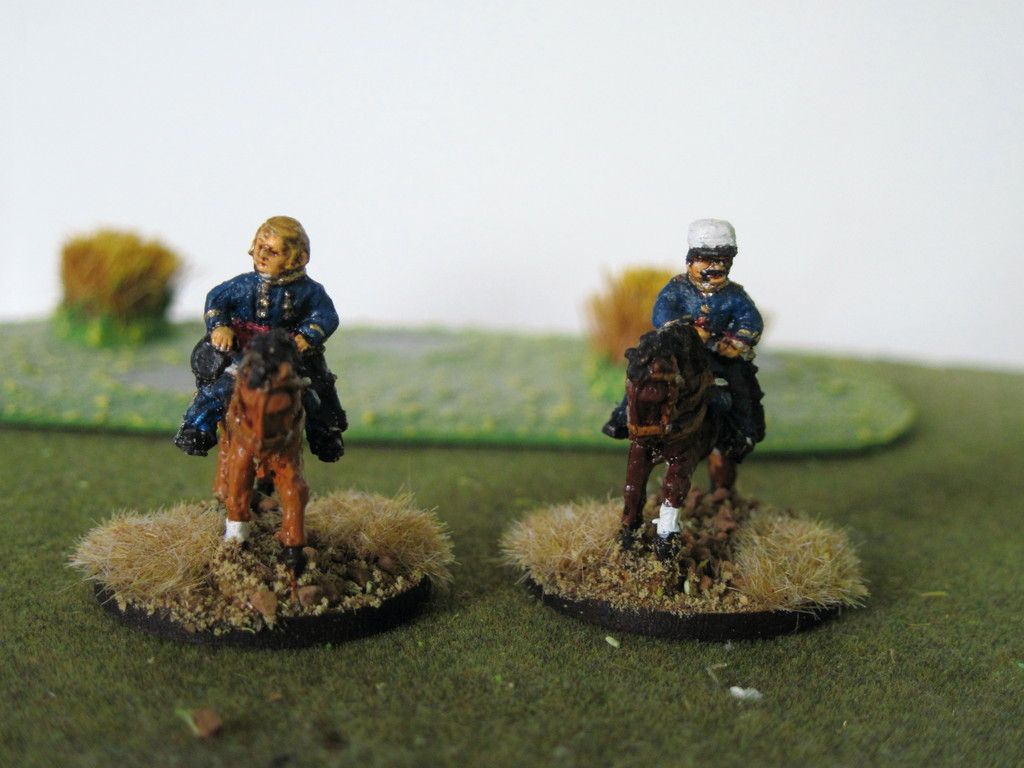
British commanders during the Mutiny ran the whole Piquet range from Abysmal to Exceptional with everything in between.  I rate them according to the scenario.  For the above force I normally use three Brigadiers and a General.